

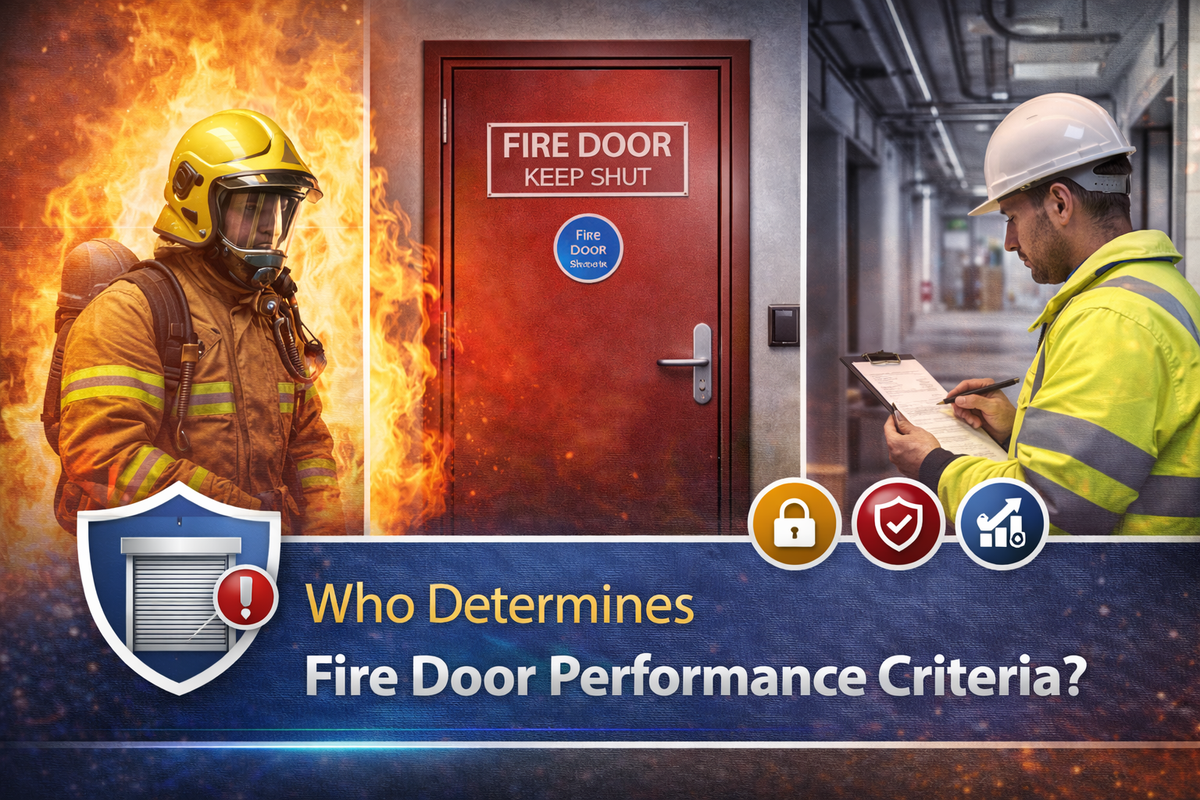
Who Can Determine the Performance Criteria of a Fire Door?
When it comes to fire safety in buildings, few components are as critical as fire doors. These specialist doors are essential for compartmentalising fire, controlling its spread, and protecting escape routes. But who is actually responsible for determining their performance criteria? In this blog, we’ll explore the key decision-makers, relevant legislation, and official guidance that govern fire door specifications.
Understanding Fire Door Performance Criteria
The performance of a fire door is typically defined by:
- Fire resistance rating (e.g., FD30, FD60 – indicating 30 or 60 minutes of resistance)
- Smoke control
- Durability
- Integrity and insulation performance
- Door hardware and frame compatibility
These criteria ensure the door performs as intended under fire conditions, providing critical life safety and structural protection.
Who Determines Fire Door Performance Criteria?
1. Building Designers and Architects
At the design stage, architects and building designers play a key role in specifying fire doors based on:
- The building’s intended use (residential, commercial, industrial)
- Layout and compartmentalisation needs
- Escape routes and occupancy levels
They reference Approved Document B (Fire Safety) of the Building Regulations to determine what level of fire resistance is required in different parts of the building.
2. Building Control Bodies
Local Building Control Officers (BCOs) or Approved Inspectors are responsible for ensuring the fire door specifications comply with the Building Regulations. They assess fire strategy documents and review specifications before and after installation.
3. Fire Risk Assessors
Under the Regulatory Reform (Fire Safety) Order 2005, the Responsible Person must conduct a fire risk assessment. Fire doors are a critical element of this assessment. A competent fire risk assessor can determine if the existing doors meet performance requirements or if upgrades are needed.
4. Product Manufacturers and Suppliers
Manufacturers and suppliers, like Security Direct, provide technical data, fire test evidence, and third-party certification to verify that doors meet required standards. While they don’t decide the performance criteria, they inform specifiers on what’s available and compliant.
5. Installers and Maintenance Professionals
Competent installers ensure that fire doors are installed according to the manufacturer’s guidance and relevant standards. Post-installation, ongoing inspection and maintenance must be carried out to retain performance levels – this often falls under facilities management or specialist contractors.
Relevant UK Legislation and Standards
Building Regulations 2010 – Approved Document B (Fire Safety) - This document outlines the statutory requirements for fire doors in new buildings or refurbishments, including where and what rating is required.
Regulatory Reform (Fire Safety) Order 2005 - This legislation applies to all non-domestic premises and places the legal duty on the ‘Responsible Person’ to ensure adequate fire precautions, including appropriate fire door installation and maintenance.
BS 476 and BS EN 1634 - These are the key standards for fire resistance testing of doorsets in the UK:
- BS 476-22: For UK-specific testing of fire doors
- BS EN 1634-1: The harmonised European standard for fire resistance testing
BS 8214:2016 – Code of Practice for Fire Door Assemblies - Provides best practice guidance for the design, installation, and maintenance of timber-based fire doors.
BS 9999:2017 – Fire Safety in Design, Management and Use of Buildings - Supports fire risk assessments and includes fire door performance guidance for ongoing compliance.
Further Guidance and Resources
To ensure fire door performance is properly determined and maintained, consult the following:
• Gov.uk – Building Regulations Approved Documents
• Fire Door Inspection Scheme (FDIS)
• BM TRADA Q-Mark Fire Door Scheme
• BWF-CERTIFIRE Fire Door Alliance
How Security Direct Can Help
At Security Direct, we supply a wide range of fire rated shutters, fire curtain and fire-rated doors, from steel fire doors for industrial premises to internal fire doors for commercial and residential buildings. All our products are:
- Independently tested and certified
- Available in FD30, FD60, FD120 options
- Supplied with full documentation for compliance
- We also offer expert advice to help you choose the right door based on your fire strategy and risk assessment.
Determining the performance criteria of a fire door is a collaborative effort involving designers, regulatory bodies, fire risk assessors, and trusted suppliers. Compliance with legislation and standards is non-negotiable, not just for regulatory approval, but for the safety of the building’s occupants.
For expert advice on choosing the right fire doors for your property, contact Security Direct today. Our knowledgeable team is here to guide you every step of the way.


