

Security Ratings Explained: LPS1175 for Roller Shutters
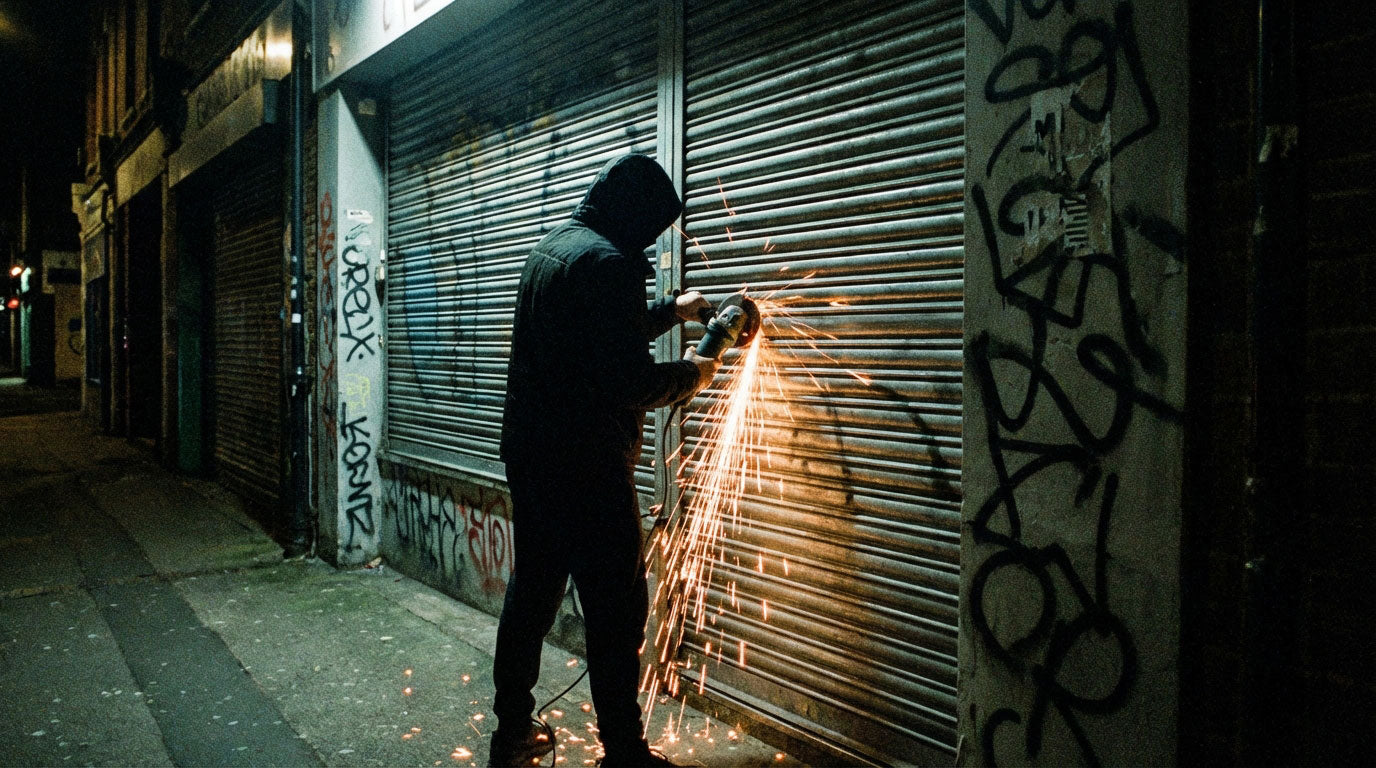
When you see a roller shutter described as LPS1175 certified or SR2 rated, it means the product has been independently tested against forced entry using defined tools and attack methods. These security ratings are widely specified by insurers, architects and commercial property managers where proven burglary resistance is required.
This guide explains what LPS1175 means, the difference between Issue 7 and Issue 8, how security ratings are classified, and how to choose the right level of protection for your premises.
What is LPS1175?
LPS1175 is a Loss Prevention Standard developed by BRE (Building Research Establishment) and administered through the LPCB (Loss Prevention Certification Board). It is one of the UK’s most recognised security testing standards for physical security products, including roller shutters, doors and grilles.
Unlike basic compliance standards, LPS1175 is an attack test standard. That means the product is physically attacked using specific tools for a defined period of time to assess whether it can resist forced entry.
A certified roller shutter must:
- Withstand attack using defined tool sets
- Prevent the creation of an opening large enough for entry
- Be tested as a complete assembly (curtain, guides, bottom rail, locking system and fixings)
Certification applies to the full tested configuration — not just the shutter curtain alone.
LPS1175 Issue 7 vs Issue 8 Explained
LPS1175 has evolved over time. The two most commonly referenced versions are Issue 7 and Issue 8.
- Ratings classified as SR1 to SR8
- Tool categories labelled A–H
- Widely specified for many years
- Still present in older specifications
- Ratings classified as A1 to C5
- Revised tool group structure (A–K)
- More structured alignment between risk and tool sets
- Current active certification format
Issue 8 modernised the classification system and introduced clearer tool grouping. For new projects, Issue 8 is the current recognised standard, although Issue 7 products are still installed where previously specified.
LPS1175 Security Ratings Explained
Security ratings are based on the level of tools used and the time the product resists attack. The higher the rating, the more sophisticated the tools and attack methods involved.
Below is a practical breakdown relevant to roller shutters.
Designed to resist opportunist attempts using basic hand tools.
Typical applications:
- Low-risk retail
- Internal security shutters
- Areas prone to anti-social behaviour
- Storage areas within buildings
This level is intended to deter casual or spontaneous attempts at forced entry.
Resists more determined attack using heavier hand tools.
Commonly specified for:
- High street shops
- Offices
- Small warehouses
- Commercial units
SR2 is one of the most commonly installed security ratings in the UK for external retail premises.
Designed to resist sustained attack using tools such as:
- Crowbars
- Bolt croppers
- Drills
Typical applications:
- Jewellery shops
- Pharmacies
- High value retail
- Areas with previous break-ins
SR3 provides significantly greater resistance and is often required by insurers where higher value stock is present.
These ratings are tested against more aggressive and organised attack methods, including certain powered tools.
Used for:
- Critical infrastructure
- High-risk commercial premises
- Locations with repeat or targeted crime
For most retail and commercial properties, the required level typically falls between SR2 and SR3.
How Are Security Rated Roller Shutters Tested?
Testing is conducted in controlled conditions by approved laboratories. The product is attacked using defined tool kits relevant to the rating being tested.
The objective of the attacker is to create an opening large enough to allow entry within a specified “working time”.
Testing assesses:
- Curtain strength and deformation resistance
- Guide rail retention
- Bottom rail integrity
- Locking system performance
- Fixings into the supporting structure
Importantly, certification applies to the entire shutter assembly. If installation differs from the tested configuration, certification may not apply.
How to Choose the Right LPS1175 Rating
Choosing the correct security rating depends on risk assessment rather than simply selecting the highest level available.
Consider:
- Location (high street vs industrial estate)
- Value of goods or equipment stored
- Previous incidents of burglary
- Insurance requirements
- Whether the property is staffed overnight
- Visibility and lighting levels
As a general guide:
- Offices - SR1 / SR2
- High street retail shop SR1 / SR2
- Jewellery or high value store - SR3 / SR4
- Warehouse or distribution unit SR2+ depending on stock
If unsure, your insurer or security consultant may specify the required rating.
Insurance Recognition and Secured by Design
Many insurers recognise LPS1175 certification as a benchmark for burglary resistance. In some cases, they may mandate a specific rating as a condition of cover.
Security rated roller shutters may also contribute toward compliance with Secured by Design requirements when specified correctly.
It is important that:
- The product is LPCB certified
- The rating matches the tested configuration
- Installation follows manufacturer guidance
Certification applies to both product and installation method.
Common Misconceptions About Security Ratings
“Thicker steel means higher security.”
Not necessarily. Security ratings are determined by complete system performance, not just material thickness.
“Any electric shutter is secure.”
Motorisation does not equal security. Security performance depends on structural resistance and locking performance.
“Only the curtain is tested.”
Incorrect. The entire assembly, including guides and fixings, is tested.
“Higher rating is always better.”
Higher ratings increase cost and weight. The correct rating should match the risk profile of the premises.
Frequently Asked Questions
What does LPS1175 mean?
What does LPS1175 mean?
It is a UK attack test standard for physical security products developed by BRE and certified by LPCB.
What is the difference between SR2 and SR3?
What is the difference between SR2 and SR3?
SR3 is tested against more aggressive tool sets and sustained attack compared to SR2, offering a higher level of protection.
Is LPS1175 better than CE marking?
Is LPS1175 better than CE marking?
CE marking relates to safety and product conformity. LPS1175 specifically tests burglary resistance.
Do domestic roller shutters need security ratings?
Do domestic roller shutters need security ratings?
Most domestic installations do not require LPS1175 certification unless specified by insurers or located in high-risk areas.
Can an existing shutter be upgraded to SR3?
Can an existing shutter be upgraded to SR3?
No. Certification applies to the tested assembly. Upgrading components does not automatically achieve certification.
Are security rated shutters always electric?
Are security rated shutters always electric?
No. Both manual and electric shutters can be security rated, provided they meet the test requirements.
View Our Security Rated Roller Shutters


Choose your option


Steel Security Shutter - LPS1175 Level 1
Choose your option

SeceuroGlide Excel Roller Garage Door
Choose your option


Choose your option


Steel Industrial Doors - LPS1175 Security Level 2
Choose your option


Aluminium Roller Shutter - LPS1175 Security Level 2
Choose your option


Punched Aluminium Roller Shutter - LPS1175 Security Level 2
Choose your option


