

Machinery Directive
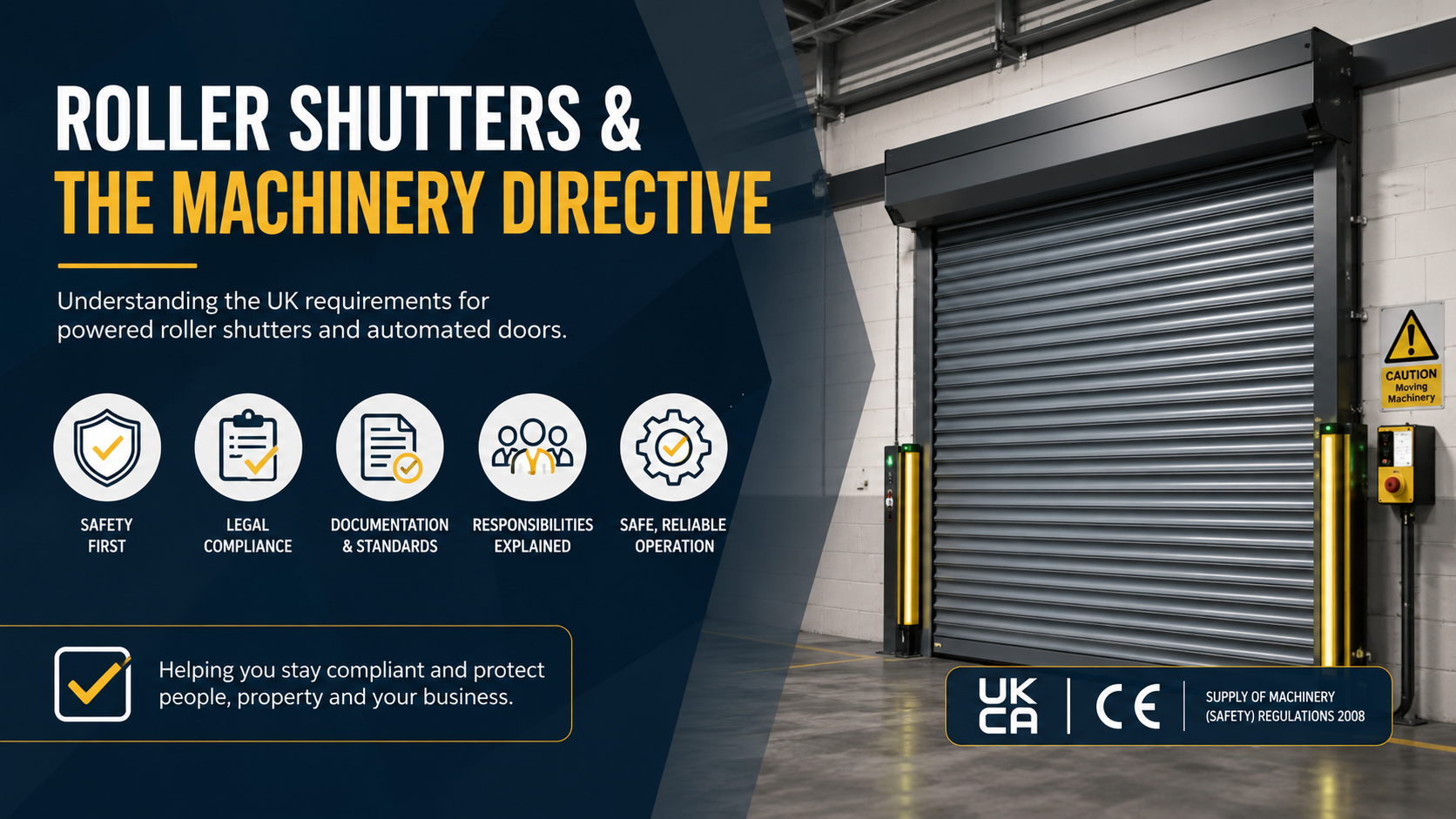
If you're purchasing a powered roller shutter, roller garage door, security grille, or automatic security gate, it's important to understand that these products are legally classified as machinery in the UK. As a result, they must comply with specific safety regulations before they can be supplied, installed, and put into service.
Understanding these requirements helps ensure your installation is safe, compliant, and properly documented.
What is the Machinery Directive?
The Machinery Directive (2006/42/EC) was introduced to ensure machinery is designed and manufactured to operate safely throughout its service life. In Great Britain, the Directive is implemented through the Supply of Machinery (Safety) Regulations 2008. Powered roller shutters fall within the scope of these regulations because they contain moving parts and present potential risks to users.
The regulations require manufacturers and installers to assess hazards, reduce risks, provide appropriate safety devices, and supply the necessary documentation before the product is placed into service.
Which Products Are Affected?
The Machinery Regulations generally apply to any powered access product, including:
- Electric Roller Shutters
- Roller Garage Doors
- Automatic Security Grilles
- Industrial Roller Shutters
- Sectional Overhead Doors
- Automatic Sliding Gates
- Automatic Swing Gates
- Rising Arm Barriers
Manual shutters that are not power operated are generally not classified as machinery, although they may still need to comply with other product standards.
What Are the Main Requirements?
For a powered roller shutter to be compliant, it should typically include:
A risk assessment must identify potential hazards associated with installation, operation, maintenance, and emergency situations.
Depending on the application, safety measures may include:
- Safety edges
- Photocells
- Light curtains
- Anti fall devices
- Emergency stop controls
- Hold to run operation
These systems help prevent injury and reduce the risk of entrapment.
A Declaration of Conformity confirms that the product complies with the relevant legislation and safety requirements. This document should be supplied with every compliant powered installation.
Powered roller shutters supplied in Great Britain must be appropriately marked to demonstrate conformity with applicable regulations. The UK currently recognises both CE and UKCA marking routes for many product categories.
Users must receive clear instructions covering operation, maintenance requirements, emergency procedures, and safe use of the product.
Who Is Responsible?
The manufacturer must:
- Design a safe product
- Complete a risk assessment
- Compile technical documentation
- Provide instructions
- Issue a Declaration of Conformity
- Apply the appropriate conformity marking
The installer is responsible for ensuring the product is installed correctly and that all required safety devices function as intended. Where modifications are made, additional compliance obligations may apply.
Once installed, the owner or operator is responsible for ensuring the shutter remains safe and properly maintained throughout its life. Regular servicing and inspections are recommended, particularly in commercial environments.
Relevant Standards for Roller Shutters
EN 13241 is the primary European and UK product standard covering industrial, commercial, and garage doors, gates, barriers, and roller shutters. It sets out the essential performance and safety requirements that manufacturers must meet before a powered or manually operated product can be placed on the market.
The standard covers a range of important factors including:
- Mechanical safety and operational reliability
- Resistance to wind loading
- Safe opening and closing forces
- Protection against crushing, shearing, and impact hazards
- Durability and cycle testing
- Water tightness, air permeability, and thermal performance (where applicable)
- Performance of safety devices and control systems
For powered roller shutters, EN 13241 works alongside the Machinery Regulations to ensure the complete installation is both safe and compliant. Compliance with EN 13241 helps demonstrate that a shutter has been designed, manufactured, and tested to recognised industry standards.
When purchasing a roller shutter, customers should ensure that the product has been manufactured in accordance with EN 13241 and supplied with the appropriate Declaration of Conformity and supporting documentation.
EN 12453 is the key safety standard for power-operated doors, gates, barriers, and roller shutters. While EN 13241 focuses on the overall product performance, EN 12453 specifically addresses the safety of users during operation.
The standard aims to minimise the risk of injury caused by moving doors and shutters by defining how potential hazards should be identified and controlled. This includes risks such as crushing, shearing, drawing-in, impact, and entrapment.
For powered roller shutters, EN 12453 requires manufacturers and installers to assess the risks associated with the installation and implement suitable protective measures.
Depending on the application, these may include:
- Safety edges that stop or reverse the shutter if an obstruction is detected
- Photocells or light curtains that prevent operation when a person or object is in the danger zone
- Hold-to-run controls where continuous pressure is required to operate the shutter
- Force limitation systems that restrict the force exerted by the shutter during operation
- Emergency stop devices where appropriate
Why EN 12453 Matters
Unlike many product standards, EN 12453 focuses on real-world use and user safety. A roller shutter that complies with EN 13241 may still require additional safety measures under EN 12453 depending on how and where it is installed.
For example:
- A warehouse loading bay shutter may require photocells and safety edges due to vehicle and pedestrian traffic.
- A shopfront shutter operated by trained staff may require different protection measures.
- An industrial shutter used in public areas may require enhanced safeguarding because members of the public could be exposed to the moving door.
Risk Assessment and Compliance
EN 12453 places significant emphasis on risk assessment. Every powered roller shutter installation should be evaluated to determine:
- Who will use the shutter
- How often it will operate
- Whether pedestrians or vehicles are present
- The potential crushing, impact, or entrapment hazards
- The most appropriate safety devices to reduce those risks
This is why two seemingly identical roller shutters may require different safety systems depending on their location and intended use.
Relationship with the Machinery Regulations
EN 12453 is widely used to demonstrate compliance with the Machinery Regulations and is considered one of the most important standards for powered roller shutters in the UK. By following its requirements, manufacturers and installers can help ensure that powered shutters are safe to operate, legally compliant, and suitable for their intended environment.
The Supply of Machinery (Safety) Regulations 2008 are the UK regulations that govern the design, manufacture, supply, and installation of machinery. They implement the requirements of the Machinery Directive and apply to powered roller shutters, roller garage doors, security grilles, automatic gates, and other motorised access products.
The purpose of the regulations is to ensure that machinery is safe throughout its intended lifecycle, from installation and commissioning through to operation, maintenance, and eventual decommissioning. Manufacturers and installers must identify potential hazards, eliminate risks where possible, and implement suitable safety measures to protect users.
For powered roller shutters, compliance typically involves:
- Carrying out a formal risk assessment
- Installing appropriate safety devices where required
- Ensuring the product meets relevant standards such as EN 13241 and EN 12453
- Providing operating and maintenance instructions
- Supplying a Declaration of Conformity
- Applying the appropriate conformity marking (CE or UKCA)
The regulations place legal responsibilities on manufacturers, suppliers, installers, and anyone who modifies machinery. If significant changes are made to a powered roller shutter after installation, the person making those changes may assume some of the responsibilities of a manufacturer and be required to reassess compliance.
Why Are These Regulations Important?
Powered roller shutters contain moving components that can create risks such as crushing, impact, shearing, and entrapment if they are not properly designed or protected. The Supply of Machinery (Safety) Regulations ensure that these risks are assessed and controlled before the product is put into service.
For building owners and end users, compliance provides confidence that the shutter has been designed, tested, installed, and documented in accordance with recognised safety requirements. It also helps support legal compliance, workplace safety obligations, and insurance requirements.In simple terms, if a roller shutter is electrically operated, it is likely to be considered machinery and must comply with the Supply of Machinery (Safety) Regulations before it can be legally supplied and used in the UK.
PUWER 1998 is a workplace safety regulation that applies to equipment used by employees during the course of their work. Unlike the Machinery Regulations, which focus on the design and supply of a roller shutter, PUWER applies after the shutter has been installed and is in use.
For businesses, landlords, and building operators, PUWER requires work equipment to be maintained in a safe condition, inspected where necessary, and used only by people who have received appropriate information, instruction, and training. This means that powered roller shutters used in commercial, industrial, retail, and public buildings should be regularly serviced and checked to ensure they continue to operate safely.
How Does PUWER Affect Roller Shutters?
Under PUWER, duty holders should ensure that:
- Roller shutters are maintained in a safe working condition
- Safety devices remain operational and effective
- Defects are identified and repaired promptly
- Regular inspections are carried out where required
- Employees are trained in the safe operation of the equipment
- Records of servicing and maintenance are retained
If a roller shutter develops a fault that could create a risk of injury, it should not continue to be used until the issue has been rectified.
Why Is PUWER Important?
Even a fully compliant roller shutter can become unsafe if it is not properly maintained. Over time, wear and tear, accidental damage, or faulty safety devices can increase the risk of injury and equipment failure. PUWER helps ensure that powered shutters remain safe throughout their operational life, reducing risks to employees, contractors, visitors, and members of the public.
For many businesses, regular servicing by a qualified engineer is the most effective way to demonstrate compliance with PUWER and maintain the safe operation of their roller shutters.
Why Compliance Matters
A compliant roller shutter is not simply a legal requirement, it helps protect users, property owners, employers, and maintenance personnel from unnecessary risk. Purchasing from a reputable supplier ensures that the shutter has been correctly assessed, supplied with the appropriate documentation, and fitted with the necessary safety systems.
At Security Direct, all powered roller shutters, garage doors, security grilles, and automated access products are supplied with compliance and safety in mind, helping customers meet their legal obligations while ensuring safe and reliable operation.
Frequently Asked Questions
Are roller shutters covered by the Machinery Directive?
Are roller shutters covered by the Machinery Directive?
Yes. Any electrically operated roller shutter, roller garage door, security grille, or similar powered product is generally classified as machinery and must comply with the Supply of Machinery (Safety) Regulations 2008, which implement the Machinery Directive in the UK.
Do manual roller shutters need to comply with the Machinery Directive?
Do manual roller shutters need to comply with the Machinery Directive?
No. Manually operated roller shutters are not typically classified as machinery because they do not use a motor or automated control system. However, they may still need to comply with other relevant product and safety standards.
What safety devices are required on a powered roller shutter?
What safety devices are required on a powered roller shutter?
The required safety devices depend on the type, size, and location of the shutter. Common safety measures include safety edges, photocells, light curtains, anti-fall devices, and hold-to-run controls. A risk assessment determines the appropriate protection for each installation.
What documentation should I receive with a compliant roller shutter?
What documentation should I receive with a compliant roller shutter?
A compliant powered roller shutter should be supplied with operating instructions, maintenance guidance, a Declaration of Conformity, and details of the applicable standards and regulations. This documentation demonstrates that the product has been assessed and supplied in accordance with legal requirements.
Who is responsible for maintaining a compliant roller shutter?
Who is responsible for maintaining a compliant roller shutter?
Once the shutter has been installed and handed over, the building owner or operator is responsible for ensuring it remains safe to use. Regular servicing, inspections, and repairs should be carried out in accordance with the manufacturer's recommendations and any workplace safety requirements.


