

Design and Specification Support
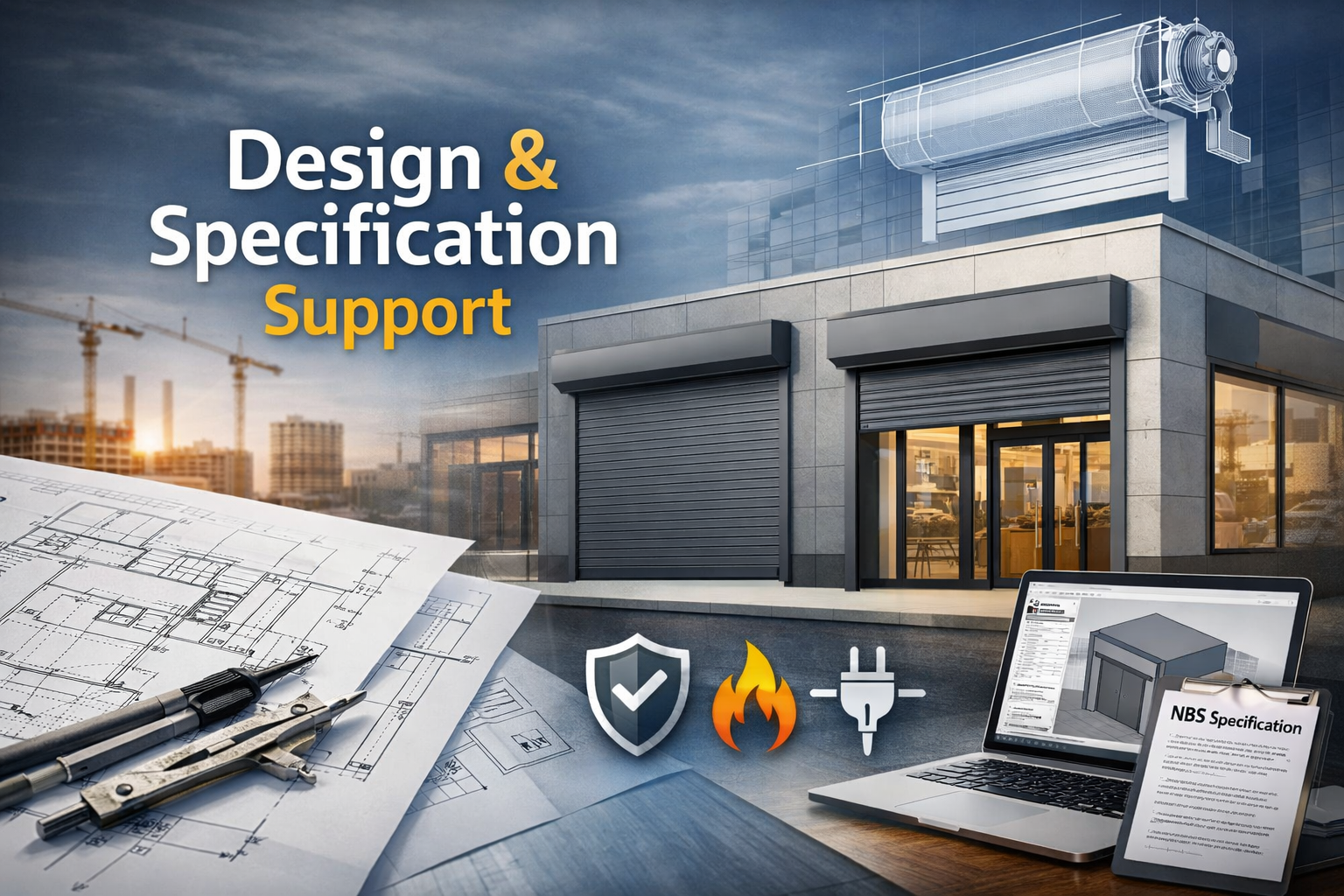
Designing openings such as roller shutters, security grilles and industrial doors requires careful planning. The correct product must suit the opening, meet security or fire requirements, integrate with the building structure and work safely with electrical and automation systems.
Security Direct offers a range of design and specification services to support architects, contractors and property owners through the early design stages of a project.
1. Technical Drawings and Standard Detail Drawings
We maintain a library of standard detail drawings for the majority of our products, including roller shutters, security grilles, steel doors and fire shutters.
These drawings typically include:
- Plan and elevation drawings
- Head, jamb and threshold details
- Fixing and substrate requirements
- Motor and control locations
- Typical electrical requirements
Drawings are normally supplied free of charge once an order is placed.
If drawings are required during early design or planning stages, we can usually provide them on request. In some cases, where bespoke drawings or significant design work is required, a design fee may apply.
These drawings allow architects and contractors to:
- Confirm structural openings
- Plan cladding or façade interfaces
- Coordinate with other trades
- Avoid installation conflicts later in the project
2. AI Assisted Visual Design
Using modern visual tools and AI assisted imaging, we can help visualise how products will look on your building.
By overlaying products such as roller shutters, security grilles or steel doors onto photographs of your building or opening, we can provide a realistic preview of the final installation.
This helps clients and designers to:
- Understand how the product will appear in the finished building
- Compare design options
- Select colours and finishes
- Present proposals to stakeholders or planning authorities
This process can be particularly useful for heritage buildings, shopfronts or residential properties where appearance is important.
3. Product Selection Advice
Choosing the correct product at the design stage can avoid costly mistakes later.We work with architects, contractors and building owners to understand:
- The purpose of the opening
- Security requirements
- Fire rating requirements
- Frequency of use
- Environmental conditions
- Aesthetic requirements
Based on this information, we can recommend the most suitable product type for the application.
This ensures the correct solution is selected from the start rather than discovering later that a product does not meet the required specification.
4. Substrate and Structural Advice
Many installation issues arise because the supporting structure has not been designed correctly for the product being installed.We can advise on:
- Suitable substrates for fixing roller shutters and doors
- Steelwork requirements for large openings
- Masonry or concrete fixing requirements
- Mounting options (face fix, reveal fix or between guides)
- Headroom and side room requirements
This advice helps ensure the opening is correctly prepared before installation begins
5. Electrical and Control Requirements
Automated shutters, fire shutters and industrial doors often require electrical integration.
We can provide guidance on:
- Power supply requirements
- Isolation switches
- Control panels
- Fire alarm interface requirements
- Battery backup systems
- Safety devices such as photocells or safety edges
Planning these requirements early helps prevent delays during installation.
6. NBS Specification Support
We can assist architects and specifiers with creating accurate NBS specifications for security shutters, grilles and doors.
NBS (National Building Specification) is widely used in the UK construction industry to define materials, performance requirements and installation standards for building projects.
Our team can help:
- Identify the correct product for your specification
- Produce product specific NBS clauses
- Ensure the specification includes correct performance standards
- Avoid generic specifications that may later prove unsuitable
This reduces the risk of products being incorrectly specified or substituted during procurement.
7. Specification Review and Validation
Many specifications include generic descriptions that do not reflect real products or tested systems.
We can review specifications and highlight:
- Unrealistic performance requirements
- Conflicting standards
- Missing safety requirements
- Products that do not exist or cannot be certified
Correcting these issues early prevents problems during tender or construction.Specification consulting is often used by architects and consultants to ensure building specifications align with regulations, performance requirements and project documentation.
8. Compliance and Standards Guidance
We can assist with understanding the relevant standards for your project.
Depending on the product type, these may include:
- LPS1175 security ratings
- Fire resistance standards
- Machinery Directive requirements
- CE / UKCA compliance
- Safety requirements for powered doors
Understanding these requirements at the design stage helps ensure the correct products are selected.
9. BIM and Technical Information
For larger projects, we can provide technical information to support BIM modelling and coordination.
This may include:
- Product dimensions and tolerances
- Weight and structural loading
- Electrical requirements
- Operation clearances
Many manufacturers now provide BIM objects and specification data to help architects coordinate building elements within digital models.
10. Site Surveys and Design Verification
Where required, we can carry out site surveys to confirm opening sizes and structural conditions before manufacture.
This allows us to verify:
- Structural openings
- Headroom availability
- Fixing substrates
- Electrical access
- Installation constraints
Surveying the opening early helps avoid delays and ensures the product is manufactured correctly.
11. Budget Guidance During Design
Early budget guidance can help architects and developers plan projects more accurately.
We can provide:
- Indicative pricing ranges
- Cost comparisons between different product types
- Advice on cost saving design options
- Information on lead times
This helps clients make informed decisions before finalising the specification.
Frequently Asked Questions
Do you provide specification information for architects and consultants?
Do you provide specification information for architects and consultants?
Yes. We regularly support architects, consultants and designers during the specification stage of projects. We can provide technical product information, drawings, performance data and advice on the most suitable products for your application.
Our aim is to ensure the product specified will meet the required performance standards, security ratings and installation conditions before the project reaches tender stage.
Can roller shutters and security grilles be included in an NBS specification?
Can roller shutters and security grilles be included in an NBS specification?
Yes. Roller shutters, security grilles and steel doors can all be specified using NBS clauses and product specific performance requirements. We can assist by providing accurate product descriptions, performance data and specification wording.
This helps avoid situations where generic or outdated specification clauses are used that may not reflect real, tested systems.
What technical information do architects normally need when specifying shutters or security grilles?
What technical information do architects normally need when specifying shutters or security grilles?
Architects typically require technical information such as:
- Overall product dimensions and clear opening sizes
- Headroom and side room requirements
- Fixing and substrate requirements
- Security or fire performance ratings
- Electrical supply requirements for automated systems
- Control and safety device options
Providing this information early in the design stage helps ensure the product can be integrated into the building design.
Can you review an existing specification or design proposal?
Can you review an existing specification or design proposal?
Yes. We can review specifications, drawings or design proposals to confirm that the products specified are suitable for the intended application.
This can help identify potential issues such as unrealistic performance requirements, incorrect product types or missing installation requirements before construction begins.
Can you show how a product will look on our building?
Can you show how a product will look on our building?
Yes. Using AI-assisted visualisation tools, we can overlay products such as roller shutters or security grilles onto photographs of your building or opening. This allows you to see how the product will look before installation and helps when choosing colours, finishes or design options.
This approach can be particularly useful for retail shopfronts, residential properties and buildings where appearance is important.


