

Healthcare
Security and fire safety solutions for hospitals, clinics and care facilities, including fire doors, fire curtains and security grilles.
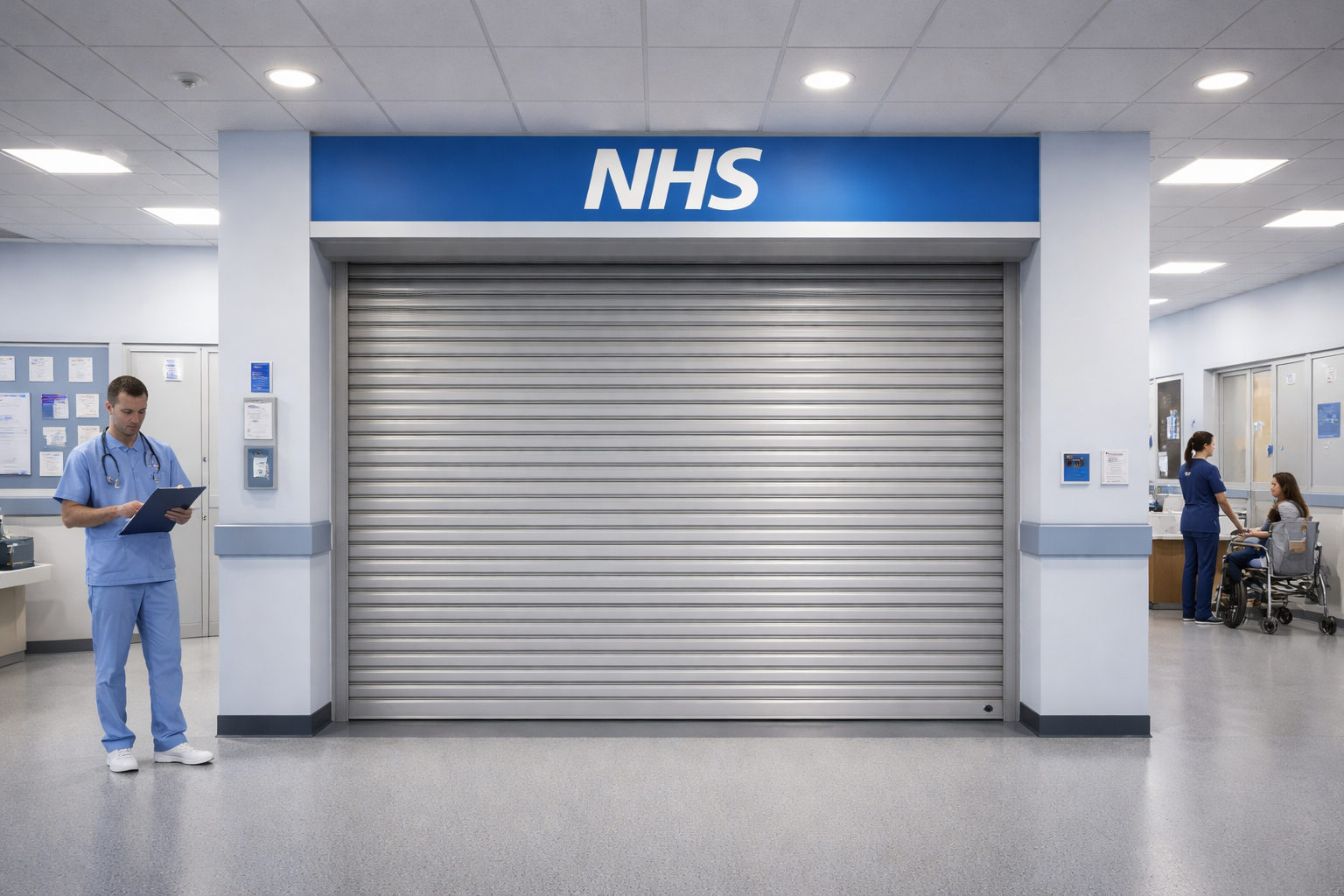

Professional, Compliant Protection for Healthcare Facilities
Healthcare environments require a careful balance of security, fire safety, infection control, accessibility and uninterrupted operation. Whether protecting NHS hospitals, private healthcare facilities, clinics, pharmacies or care homes, every security solution must safeguard patients, staff, visitors and critical assets while supporting the day to day delivery of healthcare services.
At Security Direct, we design, supply, install and maintain security steel doors, fire shutters, security grilles and automated access solutions specifically for healthcare environments throughout the UK.
Understanding the Challenges in Healthcare Buildings
Healthcare facilities present unique operational and regulatory challenges. Security systems must protect sensitive areas, maintain fire compartmentation and support safe evacuation, all while remaining reliable, hygienic and unobtrusive within busy clinical environments.
Common challenges include:
- Fire compartmentation between wards, departments and escape routes
- Securing pharmacies, drug stores and controlled medication rooms
- Protecting medical stores, laboratories and plant rooms
- Fire protection for kitchen serveries, storage rooms and service openings
- Controlling access to staff-only and restricted clinical areas
- Integration with fire alarm, access control and building management systems
- Quiet, reliable operation that does not disrupt patient care
- Durable, hygienic finishes suitable for demanding healthcare environments
Our approach focuses on delivering fully compliant, dependable solutions that enhance safety, security and operational efficiency while meeting the strict requirements of modern healthcare facilities.
Product Ranges for Commercial Offices
1. Reception Areas & Main Entrances
1. Reception Areas & Main Entrances
Reception spaces must feel welcoming during office hours while remaining secure after hours.
Typical requirements:
- Discreet security shutters or grilles
- Smooth, quiet operation
- Manual or automated control
- Minimal visual impact when open
2. Internal Corridors & Compartmentation
2. Internal Corridors & Compartmentation
Fire safety regulations often require internal fire separation between zones or floors.
Typical requirements:
- Fire rated shutters or fire doors
- Automatic activation on fire alarm
- Compact designs for limited headroom
- Fail safe operation
3. Stairwells & Escape Routes
3. Stairwells & Escape Routes
Critical life safety areas where compliance is non negotiable.
Typical requirements:
- Fire Curtains to prevent the spread of fire and smoke
- Automatic release on fire signal
- Compliance with escape route regulations
- Reliable operation with battery backup
4. Plant Rooms & Electrical Rooms
4. Plant Rooms & Electrical Rooms
Plant rooms house critical systems and must be both secure and fire protected.
Typical requirements:
- Fire rated steel louvered doors or shutters
- Robust construction
- Secure locking
- Optional automation for frequent access
5. Service Risers
5. Service Risers
Often overlooked but essential for fire compartmentation.
Typical requirements:
- Compact fire shutters or fire doors
- Minimal footprint
- Automatic operation on alarm
- Easy inspection and maintenance
6. Ground Floor & External Openings
6. Ground Floor & External Openings
Ground floor offices are more vulnerable to forced entry.
Typical requirements:
- High security shutters or High Security grilles
- Manual or automated operation
- Out of hours protection
- Visual deterrence without appearing industrial
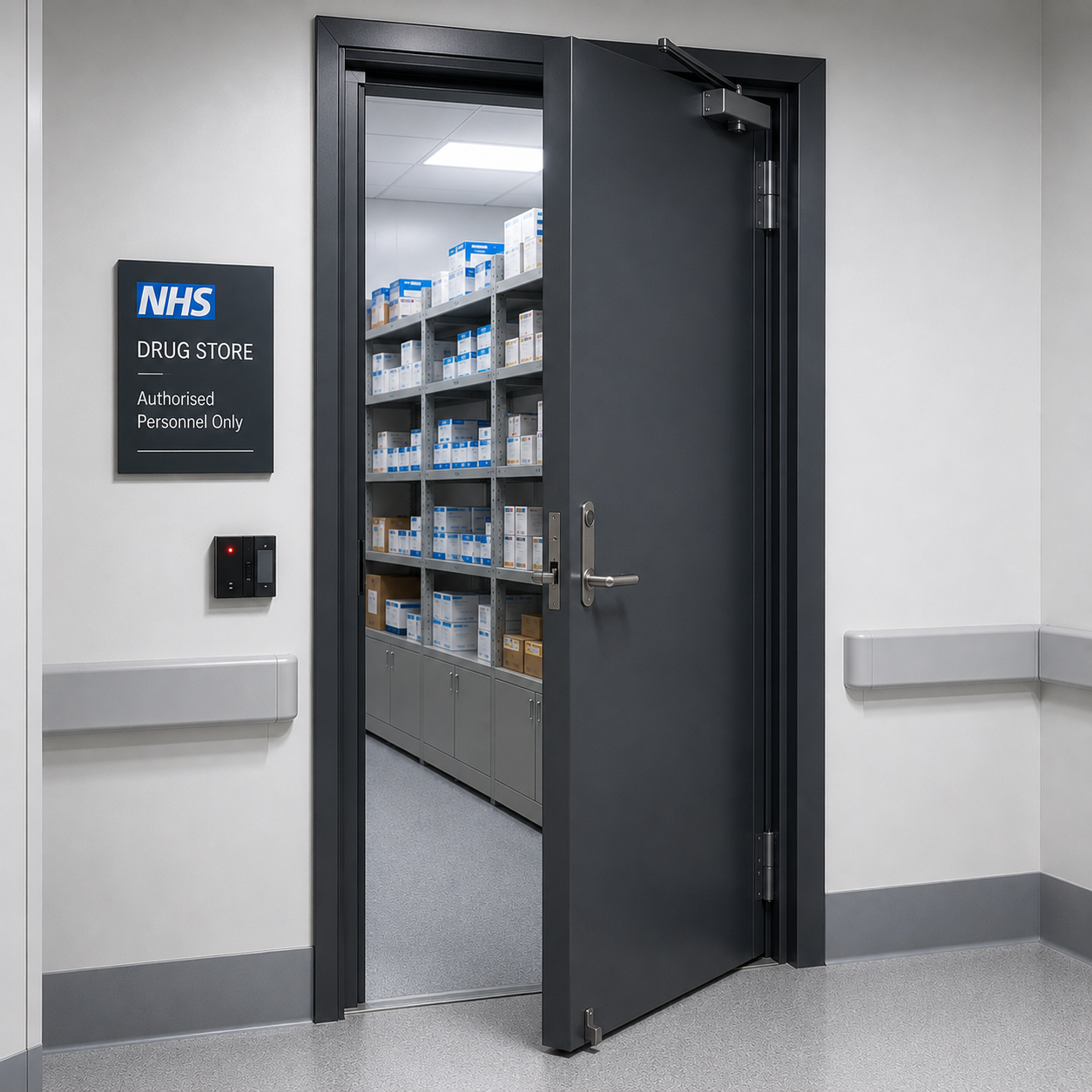
Why Choose Security Direct?
- Proven experience delivering security and fire protection solutions across NHS hospitals, private healthcare facilities, clinics and care homes.
- Practical advice that balances patient safety, regulatory compliance and day to day operational requirements.
- Products engineered for high traffic healthcare environments, where reliability and minimal disruption are essential.
- UK wide survey, installation, maintenance and responsive aftercare support.Solutions designed for long term performance, hygiene, durability and ease of operation.
Whether you're constructing a new hospital, refurbishing a healthcare facility or upgrading an existing department, we'll help you specify compliant security and fire protection solutions that integrate seamlessly into your building while protecting patients, staff, visitors and critical assets.
Compliance, Standards & Building Regulations
Our healthcare security and fire protection solutions are specified to meet the latest industry standards and healthcare requirements, including:
- Fire rated products tested to recognised UK and European standards.
- Integration with fire alarm systems for automatic activation during a fire event.
- Battery backup and fail safe operation for life safety applications.
- Solutions suitable for new hospitals, healthcare refurbishments and retrofit projects.
- Products designed to support healthcare fire compartmentation strategies and secure restricted clinical areas.
We regularly work alongside:
- NHS TrustsPrivate Healthcare Providers
- Estates & Facilities Managers
- Healthcare Consultants
- Fire Engineers
- Architects
- Main Contractors
- Mechanical & Electrical Contractors
- Building Control Officers
Bestselling Products for Commercial Office Environments


Window Security Bars
Choose your option


Retractable Security Grille - High Security
Choose your option


Punched Steel Roller Shutter - 24% Vision
Choose your option


Choose your option
FAQ's Commercial Office Physical Security
1. Can fire shutters be used in occupied office buildings?
1. Can fire shutters be used in occupied office buildings?
Yes. Fire shutters are designed to remain open during normal operation and only activate in the event of a fire alarm.
2. Are security shutters suitable for reception areas?
2. Are security shutters suitable for reception areas?
Yes. Discreet shutters and grilles can be installed to protect reception areas after hours while remaining unobtrusive during the day.
3. What happens if there is a power failure?
3. What happens if there is a power failure?
Critical systems can be supplied with battery backup to ensure safe operation in power loss scenarios.


