

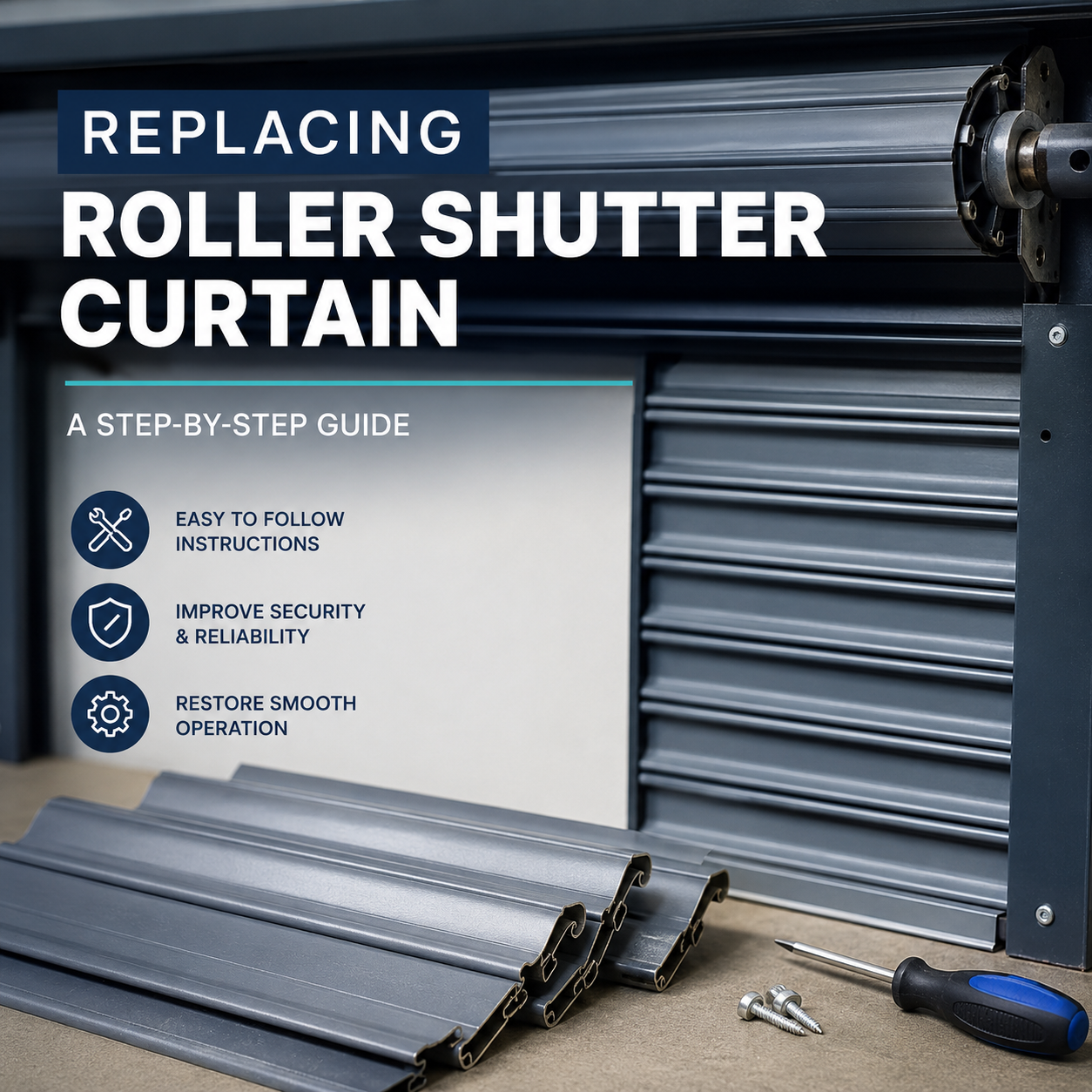
Replacing Shutter Curtains
Over time, roller shutter curtains can become damaged, worn, or misaligned due to daily use, accidental impact, or attempted break-ins. In many cases, you do not need to replace the entire shutter system. Instead, you can replace individual slats or the full curtain to restore performance and appearance.
Replacing slats or curtains is a cost-effective way to extend the life of your shutter, but it is important to ensure that any replacement parts match the original specification. Using the wrong slat profile or thickness can affect how the shutter operates, including balance, weight, and how it runs in the guides.
This guide explains how to identify, measure, and replace your shutter curtain correctly, whether you are replacing a few damaged slats or the entire curtain.
Replacing a Shutter Curtain
1. Establishing What Needs Replacing?
1. Establishing What Needs Replacing?
Replacing a few slats
- Localised damage such as dents or bends
- Wear in specific areas
- Impact damage from vehicles or equipment
Replacing the full curtain
- Multiple damaged slats
- Curtain is no longer running smoothly
- General wear over time
- Corrosion or deterioration
If only a small section is damaged, replacing individual slats is usually sufficient. If damage is widespread, a full curtain replacement is often more practical.
2. Matching the Correct Slat (Very Important)
2. Matching the Correct Slat (Very Important)
When replacing slats, you must match the original specification exactly.
This includes:
- Slat profile (shape and design)
- Material (steel or aluminium)
- Thickness
- Finish
Using a different slat type can cause:
- Poor operation within the guides
- Incorrect curtain weight
- Motor strain or failure
- Balance issue
Always replace like-for-like wherever possible.
If you are unsure, it is best to:
- Send photos of the existing slat
- Provide measurements
- Share any original order details if available
3. How to Measure for Replacement Slats
3. How to Measure for Replacement Slats
Accurate measurement is essential to ensure the replacement slats fit correctly.
Cut Size (Slat Width)
This is the width of the slat itself.
Measure: The distance between the inside faces of the guide rails
Deduct a small clearance if required
Over Endlock Size
This is the total width including the endlocks fitted to the slat.
Measure: The full width from endlock to endlock
This determines how the curtain sits within the guides
Additional Tips:
- Measure more than one slat to confirm consistency
- Check for wear or distortion in damaged slats
- Ensure measurements are taken from straight, undamaged sections
Providing accurate measurements ensures the slats will run correctly within the guides.
4. Replacing Aluminium and Steel Slats
4. Replacing Aluminium and Steel Slats
The replacement process is similar for both aluminium and steel shutters, but there are some key differences.
Aluminium Slats
- Typically lighter and easier to handle
- Often interlock with a tighter profile
- Care should be taken not to damage coatings
Steel Slats
- Heavier and more robust
- May require more care when removing and refitting
- Often used on larger or industrial shutters
General Replacement Process:
- Lower the shutter fully and isolate power if electric
- Access the shutter box and barrel
- Remove endlocks where required
- Slide out damaged slats
- Insert replacement slats
- Refit endlocks and secure curtain
Test operation
If unsure, always seek professional assistance, especially on larger shutters.
5. Information We Need to Supply the Correct Slats
5. Information We Need to Supply the Correct Slats
To ensure we provide the correct replacement parts, we will typically need:
- Clear photos of the shutter and slats
- Slat profile details or dimensions
- Cut size and over endlock size
- Material type (steel or aluminium)
- Approximate age of the shutter (if known)
- Quantity of slats required
The more information you can provide, the easier it is to match the correct profile and avoid delays.
6. Matching Slats to the Original Shutter
6. Matching Slats to the Original Shutter
Replacement slats must match the original shutter design to ensure:
- Correct operation within the guides
- Proper curtain balance
- Compatibility with the motor and spring system
- Smooth opening and closing
Using incorrect slats can lead to:
- Increased wear on components
- Operational issues
- Potential system failure
- Materials and Finishes
Slats are typically available in:
- Galvanised steel
- Powder-coated steel
- Extruded aluminium
Matching the original finish helps maintain both performance and appearance.
7. Installation Considerations
7. Installation Considerations
Ensure the shutter is fully isolated before starting work.
- Check guides and endlocks for wear during replacement
- Replace damaged components at the same time where necessary
- Test the shutter fully after installation
8. When to Replace the Full Curtain
8. When to Replace the Full Curtain
In some cases, replacing individual slats may not be sufficient.
A full curtain replacement may be required if:
- Damage is widespread
- Slats are no longer aligned
- The curtain is heavily worn or corroded
- The shutter is no longer operating correctly
9. Quick Guide to Replacing Aluminium Shutter Slats
9. Quick Guide to Replacing Aluminium Shutter Slats
Replacing Slats on an Aluminium Roller Shutter:
1. Isolate and Prepare
Ensure the shutter is isolated from the power supply and safe to work on.
2. Lower the Curtain
Close the shutter fully to expose the barrel.
3. Protect the Curtain and Barrel
Apply bubble wrap or protective material over the barrel to prevent damage. Lay protective covering on the floor where the curtain will be placed.
4. Remove the Curtain from Guides
As aluminium shutter guides are typically fixed and non-removable, carefully lift the curtain upwards and out of the guide rails from the top.
5. Lower Curtain to Ground
With assistance if required, lower the curtain safely onto the protected floor area.
6. Replace the Slats
Remove the damaged slats and slide in the new aluminium slats, ensuring correct interlocking and alignment.
7. Refit End Locks (if required)
Ensure end locks are secure to prevent lateral movement within the guides.
8. Reinstall the Curtain
Lift the curtain back into position and carefully feed it back into the guides from the top.
9. Test Operation
Operate the shutter fully to confirm smooth travel and correct alignment within the guides.
10. Quick Guide to Replacing Steel Shutter Slats
10. Quick Guide to Replacing Steel Shutter Slats
Replacing Galvanised Steel Slats on a Roller Shutter:
1. Lower the Curtain
Fully close the shutter so the curtain is in the down position and stable.
2. Remove Guide (if applicable)
If possible, unbolt one of the guide rails from the fixing angle to allow lateral movement of the curtain.
3. Extract the Curtain Section
Using mole grips, carefully twist and remove the end locks. Slide the curtain sideways out of the guide in sections until the damaged slats are accessible.
4. Replace the Slats
Remove the damaged slats and slide the new galvanised slats into position, ensuring they interlock correctly with the existing curtain.
5. Refit End Locks
Secure new or existing end locks to the curtain edges to prevent lateral movement within the guides.
6. Reinstall the Guide
Refasten the guide rail securely to the fixing angle.
7. Test Operation
Raise and lower the shutter to ensure the curtain runs smoothly and freely within the guides without obstruction.
Shop Our Roller Shutter Slats


Choose your option


Choose your option


Choose your option

Choose your option

Choose your option

Choose your option

Choose your option

Choose your option
Still Need Help? Contact Our Team, Today!
We can help identify your slat type and advise on the best solution based on your shutter.
Send Us Photos or Drawings
Send us images and measurements, and we will match the correct profile for you.
Request a Quote
We can provide a clear, no-obligation quote for replacement slats or full curtain systems.


