
As we approach the Christmas and New Year period, many businesses will be preparing to close their doors for a well-earned break. However, for commercial property owners, landlords and facilities managers, an extended closure can also bring additional security concerns.
Whether it's a retail shop closing over Christmas, an empty warehouse awaiting new tenants or an office building undergoing refurbishment, vacant commercial properties can be particularly vulnerable to break-ins, vandalism and unauthorised access.
An unoccupied building may contain valuable equipment, stock or materials. Even where the premises are completely empty, damage to doors, windows and the building itself can lead to expensive repairs, insurance complications and delays in bringing the property back into use.
So, what's the best way to secure a vacant commercial property?
The answer depends on the building, its location and how long it will remain unoccupied. However, physical security measures such as roller shutters, steel security doors and window security grilles can play an important role in protecting vulnerable access points.
In this guide, we'll explore the risks associated with vacant commercial buildings, the security products available and the practical steps property owners can take before leaving their premises unoccupied.
Why Are Vacant Commercial Properties More Vulnerable?
When a commercial property is occupied, employees, customers, deliveries and everyday activity provide a natural level of supervision.
Once a building becomes vacant, that regular activity disappears.
A property that remains closed for several weeks or months may attract unwanted attention, particularly if it becomes obvious that nobody is regularly visiting.
Broken windows, accumulated post, overgrown surroundings or visible damage can all suggest that a building is unoccupied.
For criminals, this may create an opportunity to attempt entry without the same risk of being disturbed.
Vacant properties can face several types of security threat, including burglary, vandalism, theft of building materials, deliberate damage and unauthorised occupation.
Copper pipework, electrical cabling, heating equipment and other building components may be targeted even when there is no stock or furniture inside.
The consequences can extend well beyond the initial incident. A damaged building may require emergency repairs, additional security measures or substantial refurbishment before it can be used again.
This is why vacant property security should be considered before the building is left empty, rather than after a problem occurs.
Are Roller Shutters a Good Way to Secure an Empty Commercial Property?
Roller shutters are one of the most recognisable physical security solutions for commercial premises.
They are commonly used to protect shopfronts, warehouse entrances, industrial units and other openings that may otherwise be vulnerable to forced entry.
When closed, a suitably specified roller shutter provides a physical barrier across the opening, making direct access more difficult.
For a vacant retail property, an external roller shutter can help protect large areas of glazing and reduce exposure to opportunistic damage.
For industrial buildings, roller shutters can secure loading bays, vehicle entrances and other large access points.
However, not all roller shutters offer the same level of security.
The appropriate product depends on the opening dimensions, the surrounding structure, the likely security threats and whether independently tested resistance is required.
Solid Roller Shutters for Vacant Shops
Solid roller shutters provide a continuous metal curtain across the opening.
This makes them a practical option for properties where visibility into the premises is not required during closure.
For example, a vacant shop awaiting a new tenant may benefit from a solid shutter that protects the glazing and restricts direct access.
Solid shutters can also help conceal the interior from casual observation.
However, the level of burglary resistance depends on the shutter's construction, locking system, installation and any independent security certification.
A solid appearance alone should not be taken as evidence of a particular security rating.
Explore our roller shutter range to see the different options available.
Perforated and Vision Roller Shutters
For some commercial properties, maintaining visibility may still be desirable.
Perforated and vision roller shutters allow varying degrees of visibility and airflow while providing a physical barrier.
These can be particularly useful for occupied retail premises where window displays remain important after closing.
For a building that will remain completely vacant for an extended period, however, a solid shutter may be more appropriate if privacy and restricting visibility are priorities.
The decision should be based on the building's security requirements and how the premises will be used.
When Should You Consider Steel Security Doors?
Windows and shopfronts often receive the most attention when securing an empty property, but pedestrian access doors can be equally important.
Rear entrances, side doors, service corridors and plant-room doors may be less visible from public areas.
These access points can become attractive targets if they are poorly secured or hidden from view.
Replacing an unsuitable external door with a properly specified steel security door can provide a stronger physical barrier.
Steel security doors are available in different constructions and security specifications, including options designed for commercial and industrial environments.
Depending on the product, features may include reinforced frames, suitable locking systems and independently tested resistance to forced entry.
Are All Steel Doors Security Rated?
No.
Although steel doors are generally associated with strength and durability, not every steel door has been independently tested against forced-entry attacks.
A standard steel door may be suitable for general access control or building security, but higher-risk premises may require a product with a recognised security rating.
For example, certain steel security doors are tested to LPS 1175, which assesses resistance to defined methods of forced entry.
The appropriate rating should be selected according to the building's risk assessment and any relevant insurance requirements.
For vacant properties, it's also important to consider how the door will be used by maintenance staff, property managers and authorised visitors.
A secure door still needs to provide safe and practical access when required.
How Can Security Grilles Protect Vacant Buildings?
Security grilles offer another option for protecting vulnerable windows and glazed openings.
They are particularly useful where a building has multiple accessible windows that could otherwise provide potential entry points.
Depending on the application, property owners may consider fixed security grilles or retractable security grilles.
Fixed Security Grilles
Fixed grilles provide a permanent physical barrier across a window or opening.
They may be suitable for certain service areas, plant rooms, storage facilities and other locations where regular access through the opening is not required.
However, fixed grilles must not obstruct any window or opening required for emergency escape.
The surrounding structure and fixing method are also important, particularly where a specified level of security resistance is needed.
Retractable Security Grilles
Retractable security grilles can be opened and folded back when access or visibility is required.
This makes them useful for properties that are temporarily vacant but expected to return to normal use.
For example, an office building undergoing refurbishment may need additional window security while remaining accessible to contractors.
Retractable grilles can provide flexibility without permanently covering the window.
They are also available in different configurations and security specifications.
Browse our security grilles collection to explore suitable options.
Should Vacant Properties Have LPS 1175-Rated Security Products?
For some commercial buildings, standard physical security measures may be sufficient.
However, properties containing valuable equipment, located in higher-risk areas or facing repeated attempted break-ins may benefit from independently tested security products.
LPS 1175 is a recognised standard used to assess the resistance of security products to forced-entry attacks.
Products are tested against defined tools and attack durations.
This provides a more meaningful indication of security performance than simply describing a shutter or door as heavy duty.
For example, a business protecting an empty warehouse containing valuable machinery may have different requirements from a small retail unit awaiting refurbishment.
The appropriate security rating should reflect the likely threats, the value of the property and any requirements set by insurers or other stakeholders.
It's also important to remember that the security performance of a tested product depends on correct installation.
The supporting structure, fixings and installation arrangement must be suitable for the product and consistent with the relevant approved specification.
You can learn more in our LPS 1175 Issue 7 and Issue 8 guide.
Does Vacant Property Insurance Require Additional Security?
Insurance is one of the most important considerations when leaving a commercial property unoccupied.
Many commercial insurance policies include specific conditions relating to vacant buildings.
These may include requirements for regular inspections, maintaining heating or water systems, securing access points and notifying the insurer when the property becomes unoccupied.
Some policies may also require particular physical security measures.
However, the exact conditions vary between insurers and policies.
Property owners should never assume that their normal commercial insurance arrangements will continue unchanged when a building becomes vacant.
Before leaving the premises empty, contact your insurer or broker to confirm the relevant conditions.
If a particular security standard or product certification is required, make sure this is clearly established before purchasing new shutters, doors or grilles.
How to Secure a Vacant Shop Over Christmas
For many retailers, Christmas and New Year closures are relatively short.
However, even a closure lasting several days can create opportunities for attempted break-ins, particularly when the surrounding area becomes quieter.
Before closing, check that all external doors, shutters and windows are functioning correctly.
Pay particular attention to rear entrances and other areas that are less visible from the street.
If roller shutters are installed, ensure they close fully and that the locking arrangements operate as intended.
Any existing damage should be addressed before the holiday period.
It is also worth checking whether exterior lighting, alarms and CCTV systems are functioning correctly.
Where practical, arrange for an authorised person to inspect the premises during the closure, particularly if required by your insurance policy.
For businesses with valuable stock, consider whether additional protection is needed around vulnerable access points.
What About Empty Warehouses and Industrial Units?
Vacant warehouses and industrial units present different challenges from high-street shops.
These buildings often have large roller shutter openings, multiple access doors and extensive external areas.
They may also be located on industrial estates that become particularly quiet during evenings, weekends and holiday periods.
Even when the building is empty, valuable infrastructure may remain.
Electrical systems, heating equipment, cabling and other components can attract theft.
For these properties, a layered security approach is often appropriate.
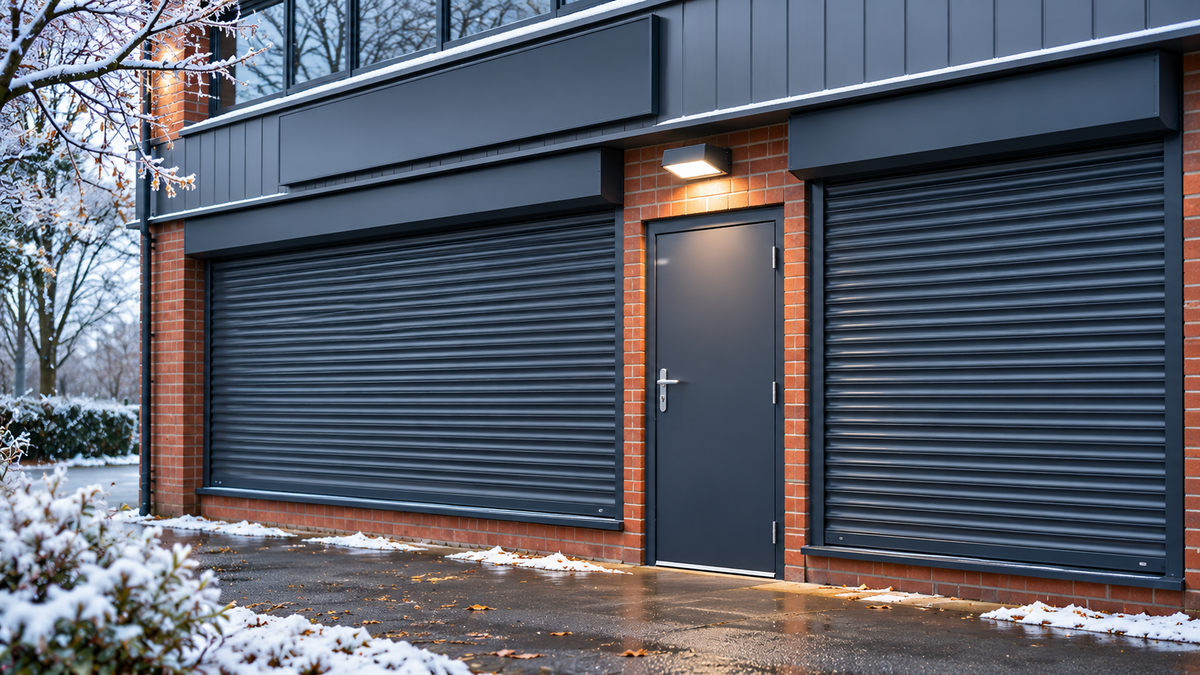
Large vehicle entrances may require suitably specified industrial roller shutters, while pedestrian access points may benefit from steel security doors.
Accessible windows and smaller openings should also be assessed.
Where a building will remain vacant for an extended period, additional measures such as monitored alarms, suitable lighting and regular inspections may be appropriate.
Physical security products work best when they form part of a wider property protection strategy.
Can Security Shutters Help Prevent Squatting?
Unauthorised occupation is another concern for owners of empty commercial properties.
An unsecured entrance or damaged window may make a vacant building easier to access.
Physical barriers such as roller shutters and steel security doors can help reduce opportunities for unauthorised entry by strengthening vulnerable openings.
However, no security product can guarantee that unauthorised occupation will be prevented.
It is also important to understand that the legal position regarding unauthorised occupation differs between residential and commercial premises.
Property owners dealing with an occupied building should seek appropriate legal advice rather than attempting unsafe or unlawful removal.
The most effective approach is to identify and address access vulnerabilities before the property becomes vacant.
Why Winter Can Make Vacant Property Security More Important
Winter brings several practical challenges for empty commercial buildings.
Longer hours of darkness can make some premises less visible, particularly where external lighting is poor.
Severe weather can also damage windows, doors, roof coverings and other building components.
If a property is not inspected regularly, damage may go unnoticed and create an additional security vulnerability.
For example, a broken window following a storm could provide an opportunity for unauthorised access.
Likewise, a damaged roller shutter may no longer close or lock correctly.
This makes regular inspections particularly important during winter.
Property owners should also consider the effects of freezing temperatures, water leaks and other maintenance issues that may cause damage while the premises are empty.
Security and building maintenance should be considered together rather than treated as separate concerns.
Common Mistakes When Securing Vacant Commercial Properties
One of the most common mistakes is assuming that a building is secure simply because the main entrance is locked.
Criminals may target less visible access points, including rear doors, accessible windows and service entrances.
Another mistake is choosing a product based entirely on its appearance.
A substantial-looking roller shutter or steel door may not provide the level of resistance required for a particular site.
Property owners may also overlook the condition of the surrounding structure.
A security grille or door is only as effective as its installation and the building elements supporting it.
Finally, some businesses fail to review their insurance conditions when a property becomes vacant.
This can create unexpected problems if a claim is made following a break-in or other incident.
A considered approach to vacant property security should address the building as a whole.
A Practical Vacant Property Security Checklist
- Before leaving a commercial building unoccupied, consider the following:
- Inspect all entrances: Check front doors, rear doors, service entrances and loading bays.
- Review window security: Identify accessible glazing and openings that may need additional protection.
- Check existing shutters: Make sure roller shutters close, operate and lock correctly.
- Assess security ratings: Establish whether independently tested products are appropriate for the level of risk.
- Review lighting and alarms: Confirm that security systems are operational and suitable for an unoccupied building.
- Check insurance conditions: Notify the insurer where required and understand any inspection or security obligations.
- Arrange regular inspections: Establish who will visit the property and how issues will be reported.
- Address maintenance problems: Repair damaged windows, doors, locks and other vulnerable components before leaving the property empty.
The right combination of measures will depend on the building and how long it is expected to remain vacant.
Frequently Asked Questions About Vacant Property Security
What is the best way to secure a vacant commercial property?
The most effective approach is usually a combination of physical security, suitable locking systems, alarms, lighting and regular inspections. Roller shutters, steel security doors and window grilles can help protect vulnerable access points.
Are roller shutters suitable for empty shops?
Yes. Suitably specified roller shutters can provide a physical barrier across shopfront windows and entrances, helping to reduce opportunities for forced entry and damage.
Do I need steel security doors on a vacant building?
Not every vacant building requires steel security doors. However, they may be worth considering for vulnerable pedestrian entrances, rear doors and service areas, particularly where a higher level of physical security is required.
Can security grilles protect an empty office?
Yes. Security grilles can help protect accessible windows and glazed openings. Retractable grilles may be particularly useful where the property will return to normal use and flexibility is important.
Do insurance companies require security shutters on vacant properties?
Requirements vary. Some insurers may specify particular security measures or inspection arrangements. Always check the conditions of your individual policy before leaving a building unoccupied.
What is LPS 1175, and do I need it?
LPS 1175 is a standard used to assess the forced-entry resistance of security products. Whether you need a rated shutter, door or grille depends on your risk assessment and any relevant insurance or project requirements.
How often should an empty commercial property be inspected?
There is no single inspection frequency suitable for every property. Your insurer may specify a minimum frequency, and the appropriate schedule will also depend on the building's condition, location and risks.
Can I secure a vacant property without permanently changing its appearance?
Potentially. Retractable security grilles and certain roller shutter arrangements can provide protection while allowing the property to return to normal use. The most appropriate solution depends on the building and installation requirements.
Protect Your Commercial Property Before It Becomes a Target
Whether your business is closing for Christmas, relocating to new premises or leaving a building vacant between tenants, security should be part of the planning process.
Empty commercial properties can face a range of risks, from opportunistic break-ins and vandalism to theft of building materials and unauthorised occupation.
By identifying vulnerable access points and choosing suitable physical security measures, property owners can reduce opportunities for unwanted entry and help protect their investment.
Roller shutters, steel security doors and window security grilles can all play an important role, but the most appropriate solution depends on the property and the level of protection required.
At Security Direct, we supply a wide range of physical security products for commercial and industrial buildings, including roller shutters, security doors and retractable security grilles.
If you're preparing to leave a commercial property unoccupied or want to improve security at an existing vacant building, our team can help you explore suitable options.
Explore our roller shutter range, browse our security grilles, or contact Security Direct to discuss your requirements.
You can also read customer feedback on our Feefo review page and Trustpilot to learn more about customers' experiences with Security Direct.