

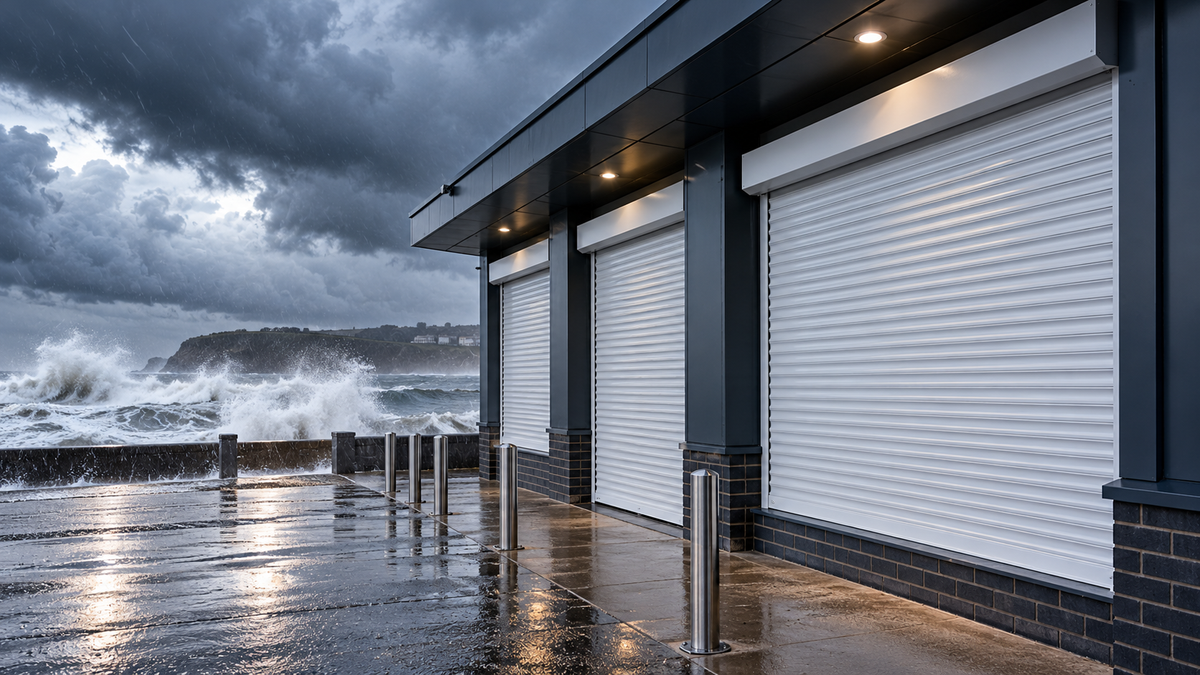
The UK's 2026/27 storm season has made a dramatic start, with Storm Austen and Storm Boelo bringing powerful winds, heavy rain and disruption across the country in quick succession.
Storm Austen affected southern parts of the UK on Friday 23 October, followed by Storm Boelo over the weekend, bringing further severe weather to Scotland, Northern Ireland and northern England.
With two named storms arriving so close together, it's a timely reminder of the importance of protecting vulnerable windows, doors and building openings before the next period of severe weather.
But do we actually need hurricane shutters in the UK?
Although the UK doesn't typically experience tropical hurricanes, powerful Atlantic storms can still produce destructive winds and flying debris. For homeowners and businesses, the practical question is whether roller shutters and other protective systems can help reduce the risk of damage.
This makes storm protection an important consideration, particularly for exposed commercial premises, coastal properties, industrial buildings and homes in areas regularly affected by severe weather.
In this guide, we'll explain what hurricane shutters are, whether they're needed in the UK and how different types of roller shutters and security products can help protect vulnerable openings.
Do We Get Hurricanes in the UK?
The UK does not typically experience hurricanes as tropical cyclones.
Hurricanes develop over warm tropical ocean waters and are associated with specific atmospheric conditions. By the time these systems reach north-west Europe, they have generally transitioned into different types of weather systems.
However, the UK can experience powerful extratropical storms, including the remnants of former Atlantic hurricanes.
These storms can produce extremely strong winds, particularly in coastal and exposed locations.
It's also worth distinguishing between a hurricane and hurricane-force winds.
A hurricane is a particular type of tropical weather system, while hurricane-force winds refer to sustained wind speeds of 74 mph or more, regardless of the type of storm producing them.
For UK property owners, the main concern isn't necessarily whether a storm is officially classified as a hurricane. It's the damage that strong winds, wind-driven debris and severe weather can cause.
When Is Storm Season in the UK?
The UK doesn't have a formal hurricane season like the Atlantic tropics, but it does have a named storm season.
The UK, Ireland and the Netherlands operate a coordinated storm-naming system, with the season running from 1 September to 31 August.
Although severe weather can occur at any time of year, autumn and winter are particularly associated with powerful Atlantic low-pressure systems.
The beginning of the storm season is therefore a useful reminder for homeowners, facilities managers and businesses to review their buildings before further severe weather arrives.
Checking vulnerable windows, external doors, roller shutters, roof coverings and drainage systems before a storm can help identify potential problems while there's still time to address them.
What Are Hurricane Shutters?
Hurricane shutters are protective coverings designed to shield windows, doors and other building openings from the effects of severe storms.
They are particularly common in regions exposed to tropical cyclones, where buildings may face extreme wind pressures and impacts from windborne debris.
Traditional hurricane shutter systems include rolling shutters, accordion shutters, removable storm panels and other purpose-designed protective systems.
Their primary function is to provide an additional physical barrier over vulnerable glazing and openings.
However, not every roller shutter or security shutter is a certified hurricane shutter.
In hurricane-prone regions, products may be tested against specific wind-load and impact-resistance requirements. A standard UK security shutter should not automatically be assumed to meet those standards.
This distinction is particularly important when choosing products for exposed buildings.
Are Hurricane Shutters Necessary in the UK?
For most UK properties, specialist hurricane-rated shutters are not a standard requirement.
However, additional window and door protection may still be worth considering, especially where a building is regularly exposed to severe weather or where damage could lead to significant disruption.
For example, a coastal shopfront with large areas of glazing may be more exposed to windborne debris than a sheltered property in an urban location.
Similarly, industrial buildings with large openings, exposed warehouses and remote commercial premises may benefit from additional physical protection.
The most suitable solution will depend on the building's location, exposure, opening dimensions and the type of protection required.
Rather than simply searching for hurricane shutters, UK customers may find that external roller shutters, security shutters or purpose-designed storm protection better describe their requirements.
Can Roller Shutters Protect Windows During Storms?
Roller shutters can provide an additional physical barrier in front of windows, doors and shopfronts.
When closed, a suitably specified shutter separates the exposed opening from direct contact with some windborne objects and other external hazards.
This can be useful for commercial buildings where glazing is vulnerable to accidental impact, vandalism or debris.
However, the level of protection depends on several factors, including the shutter's construction, dimensions, guide channels, fixings and the strength of the surrounding structure.
A shutter designed primarily for burglary resistance may not have been tested for extreme wind pressures or debris impact.
For that reason, anyone seeking protection against severe storm conditions should establish the required performance with the manufacturer or supplier before purchasing.
A properly specified shutter should be assessed as a complete system rather than judging its suitability solely by the material used in the curtain.
Roller Shutters for Coastal Properties
Coastal buildings can experience particularly challenging weather conditions.
Strong winds, salt-laden air and driving rain can all affect external building components over time.
For properties in these locations, the specification should consider both the potential wind exposure and the durability of the shutter's materials and finish.
Aluminium and steel roller shutters are available in various designs, but the most appropriate option depends on the opening, operating requirements and environmental conditions.
Corrosion protection is particularly important in coastal environments, as salt exposure can accelerate deterioration of metal components and hardware.
Regular inspection and maintenance can help identify corrosion, damage or wear before these affect operation.
For highly exposed sites, it may be necessary to obtain project-specific advice on wind loading and suitable fixings.
Protecting Shopfronts During Severe Weather
Large shopfront windows can be particularly vulnerable to impact damage.
A broken shopfront doesn't just create an immediate repair cost. It can also leave stock and equipment exposed, interrupt trading and create additional security concerns.
External roller shutters are commonly used to secure retail premises when businesses are closed.
Depending on their design and specification, they may also provide an additional barrier against some external impacts during severe weather.
Solid shutters provide a continuous physical covering, while perforated and vision shutters are designed to retain varying degrees of visibility and airflow.
The correct choice depends on the business's security requirements, shopfront design, local planning considerations and any relevant performance requirements.
Where storm resistance is a specific objective, this should be discussed separately from normal security performance.
What About Industrial Buildings and Warehouses?
Industrial buildings often have larger openings than domestic or retail properties.
Loading bays, vehicle entrances and service openings can be exposed to substantial wind pressures, especially in open industrial estates or rural locations.
An incorrectly specified or poorly maintained industrial door can become a significant vulnerability during severe weather.
For these applications, it is particularly important to consider the door's wind-load performance, operating system, guide arrangements and installation.
Large industrial roller shutters and doors should be selected according to the requirements of the opening and the conditions they are expected to withstand.
Facilities managers should also ensure that existing doors are inspected and maintained in accordance with the manufacturer's recommendations.
Can Security Shutters Protect Against Flying Debris?
Flying debris is one of the main concerns during powerful storms.
Loose roof materials, branches, signs and unsecured outdoor equipment can become dangerous when exposed to strong winds.
A roller shutter may provide an additional barrier between debris and vulnerable glazing, but impact resistance should never be assumed without suitable evidence.
A shutter that performs well against an attempted break-in is not necessarily tested for the same conditions as a specialist hurricane-impact product.
Where a property requires verified protection against windborne debris, the product should have appropriate evidence of performance for the intended application.
It's also important to remember that protecting windows and doors is only one part of preparing a building for severe weather.
Loose external equipment, signage, roof coverings and other building components can also create risks during storms.
Are Security Shutters and Hurricane Shutters the Same?
Although both can provide a physical barrier over a building opening, they are designed around different performance objectives.
Security shutters are generally intended to resist unauthorised access, vandalism and forced entry.
Some security shutters are independently tested to recognised standards such as LPS 1175, which assesses resistance to defined forced-entry attacks.
Hurricane shutters, by comparison, are designed primarily around the effects of severe tropical storms, including wind pressures and debris impact.
These performance requirements are not interchangeable.
For example, a shutter with an LPS 1175 security rating should not be described as hurricane rated unless it also has appropriate testing or certification for that purpose.
You can learn more about independently tested security shutters in our LPS 1175 Issue 7 and Issue 8 guide.
How to Prepare Your Roller Shutters Before a Storm
Preparing existing shutters before severe weather arrives is just as important as selecting the correct product.
Shutters should operate smoothly and close fully without unusual noises, obstruction or visible damage.
Guide channels, visible fixings and other accessible components should be checked for signs of deterioration. Any concerns should be assessed by a competent professional.
For electrically operated shutters, it's important to understand how the system operates during a power failure and whether any manual override is provided.
You should also follow the manufacturer's instructions on whether the shutter should be closed during particular weather conditions.
Never attempt to operate a visibly damaged shutter or carry out repairs during high winds.
Where a shutter has been exposed to a significant storm, a further inspection may be appropriate before returning it to normal use.
Choosing Storm Protection for Your Property
If you're considering shutters specifically because of severe weather, start by identifying the risks facing your property.
A sheltered high-street shop may have very different requirements from a coastal warehouse or exposed industrial unit.
The most useful information to provide a supplier includes the building location, approximate opening dimensions, whether the opening is glazed, the surrounding construction and the type of protection you're hoping to achieve.
If wind-load or impact performance is required, make this clear from the outset.
That will help establish whether a standard security shutter is appropriate or whether a more specialised, independently tested system is needed.
Frequently Asked Questions About Hurricane Shutters in the UK
Do we get hurricanes in the UK?
The UK does not typically experience hurricanes as tropical cyclones. However, powerful Atlantic storms and the remnants of former hurricanes can affect the country, sometimes producing extremely strong winds and severe weather.
What are hurricane shutters?
Hurricane shutters are protective systems fitted over windows and doors to help protect buildings against severe storm conditions. Specialist systems may be tested for wind pressure and windborne debris impact.
Are hurricane shutters required in the UK?
Specialist hurricane-rated shutters are not generally a standard requirement for UK properties. However, certain exposed buildings may benefit from additional protection, depending on their location and risk assessment.
Can normal roller shutters withstand storm-force winds?
This depends on the product's design, dimensions, installation and tested performance. Not all roller shutters are suitable for extreme wind conditions, so the manufacturer's wind-load specifications should be checked.
Are security shutters hurricane proof?
Not necessarily. Security shutters and hurricane shutters are designed around different performance requirements. A security rating does not automatically demonstrate resistance to hurricane-level wind pressures or debris impact.
What is the best shutter for a coastal property?
The best option depends on the building's exposure, opening dimensions, corrosion risks and required performance. Coastal applications may need particular attention to materials, protective finishes, fixings and wind loading.
Should I close my roller shutters during a storm?
Follow the manufacturer's guidance for your particular shutter. A suitable, undamaged shutter may be intended to remain closed during severe weather, but products that aren't designed for the expected wind conditions shouldn't be assumed to provide storm protection.
Can roller shutters help protect shop windows from flying debris?
A suitably specified shutter may provide an additional physical barrier, but resistance to windborne debris should be supported by appropriate testing or other reliable performance evidence.
Protect Your Property Before the Next Storm
The start of the UK storm season is a timely reminder that protecting a building involves more than simply locking the doors and windows.
Strong winds, flying debris and severe weather can all create risks for homes and commercial premises, particularly in exposed locations.
While the UK doesn't experience tropical hurricanes in the same way as some other parts of the world, our Atlantic storms can still cause significant damage.
Choosing the right roller shutter or protective system starts with understanding the risks and selecting a product that is suitable for the application.
At Security Direct, we supply a range of roller shutters, security shutters and physical security products for domestic, commercial and industrial properties.
If you're looking to improve the protection of vulnerable windows, shopfronts or building openings, our team can help you explore suitable options and understand which performance requirements matter for your property.
Explore our roller shutter range or contact Security Direct to discuss your requirements.
You can also read customer feedback on our Feefo review page and Trustpilot to learn more about customers' experiences with Security Direct.