

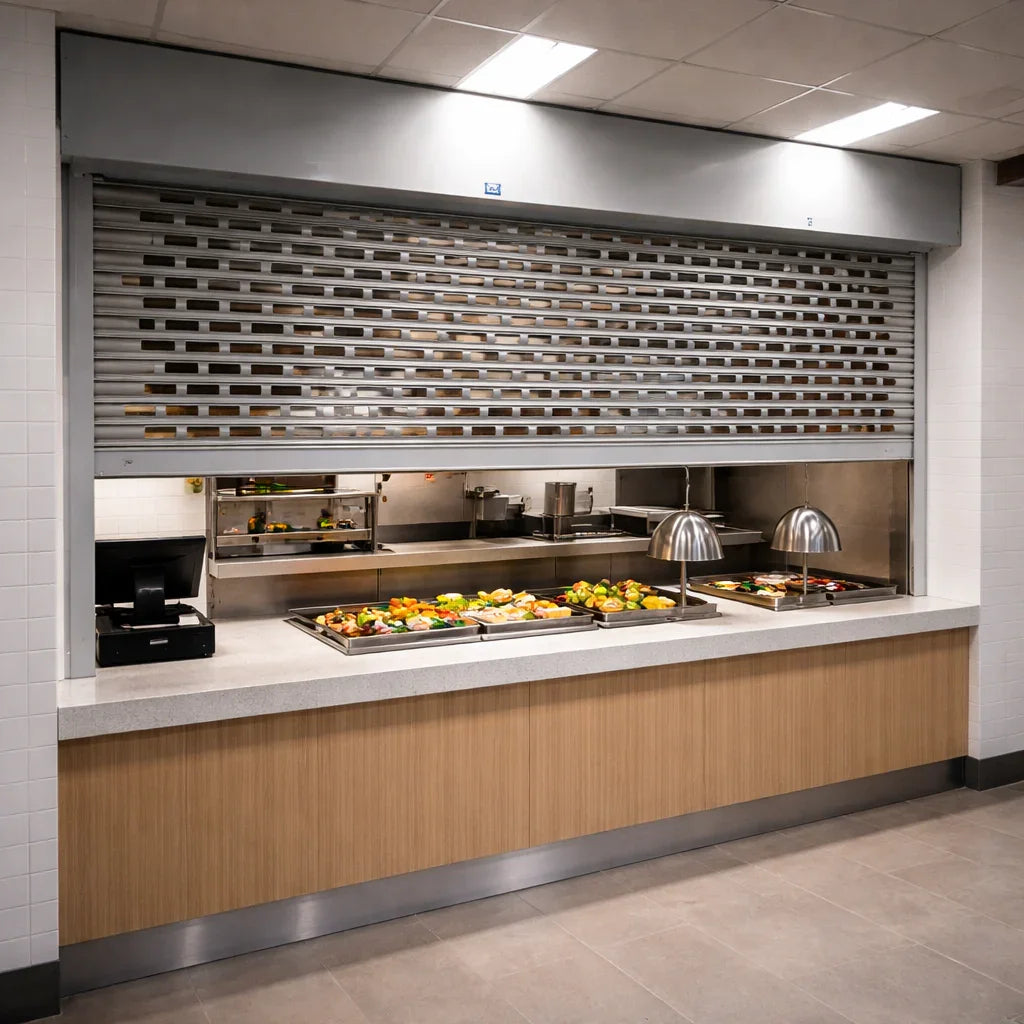

Roller Shutter Buyers Guide
Roller shutters are one of the most versatile and widely used security solutions, suitable for doors, windows, serveries, shopfronts, and industrial openings.
With a wide range of materials, configurations, and operating options available, selecting the right roller shutter depends on your application, security requirements, and budget.
This guide is designed to help you understand all the available options so you can choose the right shutter for your specific needs.
Key Benefits:
- Roller shutters can be used for visual screening, security, or fire protection
- Available in steel or aluminium, each with different benefits
- Curtain types affect visibility, airflow, and security levels
- Manual and electric operation options are available
- Electric operation is recommended for ease of use and safety
- Made-to-measure to suit almost any opening
Buyers Guides for Roller Shutters
1. What are Roller Shutters?
1. What are Roller Shutters?
The first and most important question is the purpose of the shutter.
Roller shutters are typically installed for one of three reasons:
Visual Barrier
Used where appearance and cost are more important than high security.
Examples include:
- Bars and serveries
- Shopfronts
- Internal counters
Security
- When security is the priority, the specification depends on your budget and risk level.
- Higher security shutters cost more
- Insurance-approved shutters are available
Some insurers may require specific security ratings
Fire Protection
Used in areas such as:
- Kitchen serveries
- Openings on fire escape routes
Fire shutters are usually specified by:
- Fire Officers
- Building Control
If you are unsure, always seek advice, as fire shutters are more specialised and more expensive than standard shutters.
2. Types of Roller Shutters
2. Types of Roller Shutters
There are several types of roller shutters, each designed for different applications.
Security Roller Shutters
- Designed to protect against theft and vandalism
- Available with different security levels and certifications
Insulated Roller Shutters
- Help retain heat and improve energy efficiency
- Common in warehouses and industrial buildings
Fire Rated Roller Shutters
- Designed to contain fire and protect escape routes
- Must be specified in line with fire regulations
Shopfront & Bar Shutters
- Often include perforated or punched laths for visibility
- Balance security with aesthetics
Industrial Roller Shutters
- Heavy-duty shutters for large openings
- Suitable for warehouses, factories, and loading bays
The two main materials are steel and aluminium, and each has different advantages.
Aluminium Roller Shutters
Aluminium shutters are typically extruded with a twin-wall construction, making them stronger than many people expect.
Advantages:
- Stronger construction due to reinforced extrusion design
- Suitable for external use and can achieve insurance approval
- Smaller shutter box size, ideal where headroom is limited
- Corrosion resistant and will not rust
- Better for coastal environments
- Quieter and smoother operation
- Powder coating provides a long-lasting finish
Steel Roller Shutters
Steel shutters are usually made from single-skin laths formed from steel plate.
Advantages:
- Typically the lowest cost option
- Suitable for larger openings
- Can be manufactured up to approximately 7m wide and 7m high
- Types of Curtain Available
The curtain is the main body of the shutter and affects visibility, security, and appearance.
Solid Laths
- No visibility through the shutter
- Most secure option
- Typically the lowest cost
Perforated Laths
- Small punched holes
- Approximately 15 percent visibility
- Allows some light and visibility
Punched Laths
- Larger openings or slots
- Provides 44 to 69 percent visibility
- Often used for retail applications
Options are available to:
- Reduce spacing
- Add polycarbonate inserts for added security
In some cases, different lath types can be combined in one shutter, for example vision panels at eye level with solid sections elsewhere.
3. How to Choose the Right Roller Shutter
3. How to Choose the Right Roller Shutter
Choosing the correct shutter depends on your specific requirements.
Key factors to consider:
Purpose
- Security, visual barrier, insulation, or fire protection
Opening Size
- Larger openings may require industrial or heavy-duty systems
Frequency of Use
- High usage requires electric operation and robust components
Location
- Internal vs external
- Exposure to weather or wind
Security Level
- Standard or insurance-approved systems
Selecting the right combination of these factors ensures the shutter performs correctly and lasts longer.
4. Operation Options
4. Operation Options
Roller shutters are available in manual or electric operation.
Manual Operation
Spring and Lock (Most Common)
- Lift and lower by hand with spring assistance
- Suitable for smaller shutters
Chain Operation
- Used for larger manual shutters
- Less common today
Electric Operation
- Operated by a motor
- Powered by 240V or 3 phase supply for larger shutters
Benefits:
- Easier to use
- Safer for larger shutters
- Suitable for frequent operation
Electric operation is recommended for most applications, especially larger or regularly used shutters.
5. Materials & Build Quality
5. Materials & Build Quality
The two main materials used are steel and aluminium.
Steel Shutters
- Cost-effective
- Suitable for large openings
- Typically single-skin construction
Aluminium Shutters
- Extruded twin-wall construction
- Stronger than many steel shutters
- Corrosion resistant
- Smoother and quieter operation
- Better for external and coastal environments
Material choice impacts:
- Security level
- Durability
- Appearance
- Long-term maintenance
6. Design & Customisation
6. Design & Customisation
Roller shutters can be customised to suit both functional and aesthetic requirements.
Curtain Options:
- Solid laths for maximum security
- Perforated laths for limited visibility
- Punched laths for higher visibility
Colour and Finish:
- Galvanised steel finish
- Powder coating in a wide range of colours
- Custom colours available to match branding
Additional Options:
- Vision panels
- Combination lath designs
- Windlock systems for exposed areas
Customisation allows shutters to integrate with the building design while maintaining performance.
7. Installation Options
7. Installation Options
Roller shutters can be installed in different ways depending on the building and opening.
Common Installation Types:
- Face fix (onto wall)
- Reveal fix (within opening)
Key Considerations:
- Available headroom for the shutter box
- Suitable fixing substrate (steel or masonry)
- Access for maintenance
Professional installation is recommended to ensure:
- Correct alignment
- Safe operation
- Long-term reliability
8. Maintenance & Life Span
8. Maintenance & Life Span
Roller shutters are designed for long-term use but require regular maintenance.
Typical Maintenance:
- Checking guides and curtain alignment
- Inspecting motors and controls
- Lubricating moving parts
- Testing safety features
Life Span Factors:
- Frequency of use
- Environmental conditions
- Quality of installation
- Regular servicing
Well-maintained shutters can last many years with minimal issues.
9. Price Guide
9. Price Guide
The cost of a roller shutter depends on several factors:
- Size of the opening
- Material (steel or aluminium)
- Type of curtain
- Operation (manual or electric)
- Control systems and upgrades
General Pricing Guidance:
- Steel shutters are typically the most cost-effective
- Aluminium shutters offer higher performance at a higher cost
- Electric operation adds convenience with a relatively small cost increase
- Advanced controls and automation increase overall price
The prices below are intended as a general guide only. All roller shutters are manufactured to measure, and the final cost will depend on size, specification, and installation requirements.
Manual Roller Shutters
From £450 – £900 + VAT - Typically suitable for smaller openings or low-use applications. Manual shutters are a cost-effective option where electric operation is not required.
Common uses: small shopfronts, internal counters, garages, low-frequency access points.
Electric Roller Shutters
From £750 – £1,500 + VAT Electric operation adds convenience and is recommended for larger shutters or where frequent daily use is expected. Prices vary depending on motor type, controls, and safety features.
Common uses: retail units, commercial doors, garages, industrial openings.
Perforated Roller Shutters
From £950 – £1,800 + VAT - Perforated shutters allow visibility and light while maintaining security. Costs are typically higher than solid shutters due to the slat design and finishing.
Common uses: shopfronts, shopping centres, display areas.
High-Security Roller Shutters (LPS 1175)
From £1,800 – £3,500 + VAT - High-security shutters are engineered for enhanced protection and are tested to recognised security standards. Pricing reflects reinforced materials, upgraded locking systems, and certification.
Common uses: pharmacies, banks, industrial sites, high-risk premises.
Fire-Rated Roller Shutters
From £2,500 – £5,000 + VAT - Fire-rated shutters are specialist products designed to contain fire and smoke for a certified period. Costs vary depending on fire rating, size, and control system integration.
Common uses: kitchens, serveries, plant rooms, internal compartmentation.
10. Common Mistakes to Avoid
10. Common Mistakes to Avoid
- Choosing the wrong shutter type for the application
- Focusing only on price instead of performance
- Selecting manual operation for large or frequently used shutters
- Not allowing for headroom or installation space
- Using incorrect replacement parts or specifications
- Ignoring wind exposure on external shutters
Getting the specification right from the start avoids costly issues later and ensures long-term performance.
FAQ's for Roller Shutters
1. What are roller shutters used for?
1. What are roller shutters used for?
They are used to provide security, visual screening, or fire protection for openings such as doors and windows.
2. Are aluminium shutters stronger than steel?
2. Are aluminium shutters stronger than steel?
In many cases, yes. Aluminium shutters use reinforced extrusions, making them very strong and durable.
3. Should I choose manual or electric operation?
3. Should I choose manual or electric operation?
Electric is recommended for most applications due to ease of use, safety, and minimal cost difference.
4. Can roller shutters be made to measure?
4. Can roller shutters be made to measure?
Yes. All shutters are typically made to suit the exact opening.
5.What happens if there is a power cut?
5.What happens if there is a power cut?
You can use a manual override or battery backup system to operate the shutter.
Bestselling Products - Roller Shutters


Choose your option


Insulated Aluminium Roller Shutter
Choose your option


Compact Aluminium Roller Shutter
Choose your option


Wide Span Aluminium Roller Shutter
Choose your option


Compact Perforated Roller Shutter - 18% Vision
Choose your option


Compact Punched Roller Shutter - 44% Vision
Choose your option


Roller Grille Shutter - 69% Vision
Choose your option


Punched Aluminium Roller Shutter - 58% Vision
Choose your option
Need to Talk About Your Roller Shutter?
Choosing the correct roller shutter depends on your application, security requirements, and how the shutter will be used. If you are unsure, our team can help you find the right solution.
Speak to Our Team
Our experienced team can advise on the most suitable shutter for your needs, whether you require a simple visual barrier, a high-security solution, or a specialist fire-rated system.
Send Us Your Drawings
If you have drawings, measurements, or photos, send them to us. We will review your requirements and recommend the correct specification, ensuring the shutter is suitable for your application.
Request a Quote
We can provide a clear, no-obligation quote based on your exact requirements. Where needed, we can also arrange a site survey to ensure accurate specification and pricing.


