
Data centres are among the most critical buildings in today's digital infrastructure. From cloud computing and financial transactions to healthcare systems and artificial intelligence, businesses and essential services increasingly depend on the secure, uninterrupted operation of these facilities.
While cybersecurity receives considerable attention, physical security is equally important. Preventing unauthorised access to server rooms, electrical infrastructure and other sensitive areas is essential to protecting equipment, maintaining operational continuity and reducing security risks.
Steel security doors play an important role in this protection, providing robust physical barriers between areas with different access requirements.
This illustrative case study explores how a data centre operator could strengthen its internal security infrastructure through the careful specification of steel security doors, creating a layered approach to protecting critical equipment and managing access throughout the building.
The Challenge: Securing a Complex Data Centre Environment
Unlike conventional commercial buildings, data centres contain multiple operational areas, each with its own security requirements.
A typical facility may include server halls, network rooms, electrical plant areas, battery storage facilities, maintenance corridors and administrative spaces.
Although these areas form part of the same building, they do not necessarily require the same level of access.
For example, an engineer responsible for maintaining electrical equipment may need access to a plant room but should not automatically have unrestricted access to server halls containing sensitive customer infrastructure.
The challenge is to create clear security boundaries without unnecessarily restricting the movement of authorised personnel or disrupting daily operations.
Balancing Security with Accessibility
In this scenario, the data centre operator wanted to review the physical separation between critical operational areas.
The main considerations included:
- Controlled access: Restricting entry to sensitive areas while allowing authorised personnel to work efficiently.
- Physical protection: Providing robust doors capable of resisting attempted unauthorised entry.
- Operational continuity: Ensuring maintenance teams could access essential equipment when required.
- Durability: Selecting doors suitable for frequent operation in a demanding environment.
- Fire and life safety: Ensuring door specifications supported the building's fire strategy and emergency escape requirements.
The operator needed more than a collection of heavy-duty metal doors. The objective was to develop a coordinated physical security approach that recognised the different risks associated with each area of the facility.
The Solution: A Layered Approach to Data Centre Security
A suitable solution would involve introducing purpose-specified steel security doors at key internal access points.
Rather than using an identical door throughout the building, each doorset would be selected according to its location, security requirements and operational purpose.
This approach allows physical security measures to be matched more closely to the risks associated with individual areas.
Steel Security Doors for Critical Server Rooms
Server halls often contain valuable equipment and infrastructure supporting essential digital services.
Controlling access to these spaces is therefore a fundamental part of data centre security.
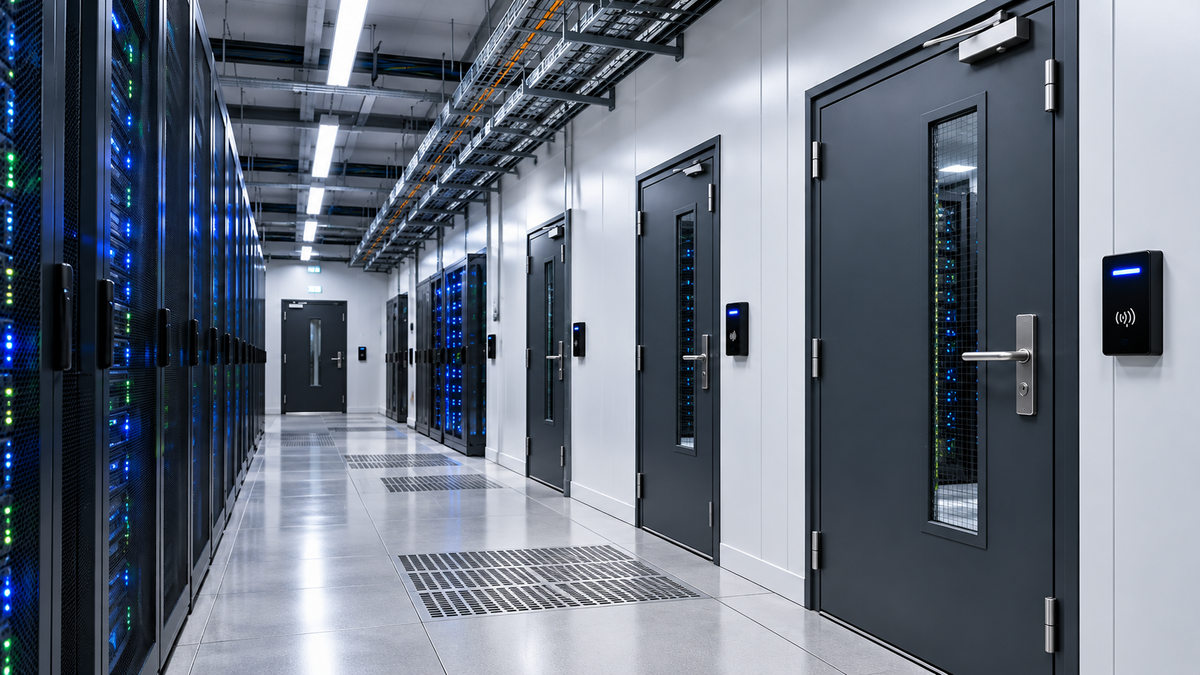
Steel security doors can provide a robust physical barrier between server halls and surrounding corridors, helping prevent unauthorised entry.
Depending on the security assessment, a suitable doorset may incorporate reinforced construction, security-rated locking hardware and independently tested resistance to forced entry.
Where enhanced protection is required, doorsets tested to recognised standards such as LPS 1175 may be considered.
Importantly, the security performance of a door depends on the complete doorset, including the leaf, frame, hinges, locks and installation, rather than simply the thickness of the steel.
Protecting Electrical and Mechanical Plant Rooms
Data centres rely on extensive supporting infrastructure, including electrical distribution equipment, cooling systems and backup power supplies.
Unauthorised access to these areas can create significant operational and safety risks.
Steel doors can help establish controlled boundaries around plant rooms, protecting sensitive equipment while allowing access for authorised engineers and maintenance personnel.
The specification must also account for the conditions within each space.
For example, certain plant rooms may require ventilation, specialist hardware or fire-resisting doorsets. These requirements must be considered alongside security performance to ensure the selected solution is suitable for its intended application.
Creating Clear Internal Security Zones
One of the most important aspects of the proposed solution is the creation of defined security zones.
Instead of treating the data centre as a single secure environment, access can be managed progressively.
Personnel entering the building may have permission to access general operational areas but require additional authorisation to enter server halls, network rooms or critical plant spaces.
Steel security doors provide the physical boundaries that make this approach possible.
When combined with an appropriate access control system, these doors can support a more structured approach to managing movement throughout the facility.
Integrating Steel Security Doors with Access Control
Modern data centres frequently use electronic access control systems to manage who can enter particular areas and when.
Depending on the doorset and operational requirements, steel security doors may be compatible with electronic locking arrangements, card readers, keypads and monitored door contacts.
These systems can help security teams manage access permissions and identify doors that have been opened or left unsecured.
However, access control compatibility must be considered during specification.
Locks, door closers, monitoring devices and emergency release arrangements must work together without compromising the tested security performance or fire safety requirements of the doorset.
For data centres operating around the clock, this coordination is particularly important.
The objective is to provide effective physical security while maintaining safe and reliable access for authorised personnel.
Why Steel Security Doors Are Suitable for Data Centres
Steel security doors offer several practical advantages for facilities where security, reliability and durability are essential.
Robust Physical Protection
Steel doorsets can provide strong resistance to physical attack when correctly designed and specified.
For areas requiring enhanced protection, independently tested security-rated doorsets offer a more reliable basis for selection than construction material alone.
Durability in Demanding Environments
Data centres operate continuously, and access doors may be used frequently by engineers, security personnel and maintenance teams.
Steel doors are well suited to demanding commercial and industrial environments, with durable finishes and hardware options designed for regular operation.
Flexible Specifications
Steel doors can be manufactured in different sizes, configurations and finishes to suit a range of internal and external applications.
Depending on the product, options may include security-rated hardware, access control compatibility, acoustic performance and certified fire resistance.
Not every feature is available on every doorset, so the complete specification must be checked against the intended application.
Long-Term Maintenance Considerations
Properly installed and maintained steel doors can provide many years of service.
Routine inspections of hinges, locks, closers, seals and other components help maintain reliable operation.
In security-sensitive environments, maintenance is particularly important because a damaged or poorly functioning door can undermine the effectiveness of an otherwise well-designed access control strategy.
Planning Installation Around a Live Data Centre
Installing or upgrading security doors within an operational data centre requires careful coordination.
Unlike many conventional construction projects, data centres may have limited opportunities for disruptive work.
Access routes must remain available, critical infrastructure must be protected and contractors may need to follow strict security procedures.
A carefully planned installation programme would consider the movement of personnel, delivery of materials, working hours and the potential impact on surrounding equipment.
Any modifications to existing fire-resisting doorsets, security systems or access control arrangements would also require appropriate technical review.
By addressing these considerations before installation, a data centre operator can reduce the risk of disruption while improving its physical security infrastructure.
The Expected Outcome: Stronger Security Through Better Zoning
The main objective of this approach is to create a more structured and resilient physical security environment.
Rather than relying solely on perimeter protection, the facility benefits from additional security boundaries around its most sensitive operational areas.
The anticipated benefits include:
- Improved access management: Clear physical separation between areas with different security permissions.
- Enhanced equipment protection: Robust barriers around critical server, network and plant infrastructure.
- Operational flexibility: Doors specified to accommodate authorised maintenance and daily activities.
- Long-term durability: Steel doorsets selected for demanding commercial environments.
- A coordinated security strategy: Physical barriers working alongside electronic access control and existing security procedures.
Actual outcomes would depend on the final doorset specification, installation quality, access control configuration and wider site security arrangements.
The underlying principle is straightforward: effective data centre security should not depend on a single barrier. It should provide multiple layers of protection appropriate to the risks associated with different parts of the building.
Why Physical Security Matters for Modern Data Centres
As demand for cloud services, artificial intelligence and digital infrastructure continues to grow, data centres are becoming increasingly important to the UK economy.
These facilities house equipment that businesses and public services rely on every day.
Although advanced cybersecurity systems protect digital information, physical security measures remain essential for preventing unauthorised access to the infrastructure supporting those systems.
Steel security doors provide a practical means of controlling access to sensitive areas, supporting the wider security strategy of a data centre.
When properly specified, they can help protect equipment, support operational requirements and create clear boundaries between different security zones.
Why Choose Security Direct for Steel Security Doors?
At Security Direct, we understand that different commercial and industrial environments require different levels of physical protection.
From general-purpose steel doors to specialist security-rated doorsets, choosing the right solution involves understanding the building, the risks involved and the way the doors will be used.
Our range of steel security doors includes solutions for demanding environments where durability, access management and physical protection are important considerations.
Whether you are planning a new data centre, upgrading an existing facility or reviewing security around critical infrastructure, our team can help you explore suitable door options.
You can also learn more about our customer experience by visiting our Feefo Reviews and Trustpilot pages.
Frequently Asked Questions
Why are steel security doors used in data centres?
Steel security doors help protect critical infrastructure by creating physical barriers between areas with different security requirements. They can be used to control access to server rooms, plant areas and other sensitive spaces.
What is security zoning in a data centre?
Security zoning involves dividing a facility into areas with different access permissions and protection requirements. Physical barriers, including security doors, help prevent unauthorised movement between these zones.
What security rating should a data centre steel door have?
The appropriate security rating depends on the risks associated with the location and the assets being protected. Independently tested doorsets, including products certified to relevant LPS 1175 classifications, may be appropriate where enhanced resistance to forced entry is required.
Can steel security doors be fitted with electronic access control?
Yes. Many steel security doors can be specified to accommodate compatible electronic access control systems, including card readers, electronic locks and door monitoring equipment. Compatibility should be confirmed for the complete doorset.
Do data centre steel doors need to be fire-rated?
Not every steel door requires a fire rating. However, doors located within fire-resisting walls or forming part of a building's fire safety strategy may require certified fire-resisting performance. Requirements should be established through the building's fire strategy and applicable regulations.
How long do commercial steel security doors last?
The service life of a steel security door depends on its construction, operating conditions, frequency of use and maintenance. Regular inspection and servicing help maintain safe, reliable operation over time.
Protect Your Data Centre with the Right Steel Security Doors
Protecting critical infrastructure requires more than securing the building perimeter.
A well-planned approach to internal security can help protect sensitive equipment, manage authorised access and support the continuous operation of essential facilities.
Whether you require steel security doors for server rooms, plant areas or controlled access points, Security Direct can help you identify suitable solutions for your project.
Contact Security Direct today to discuss your data centre security requirements and explore our range of commercial steel security doors.