

Introduction
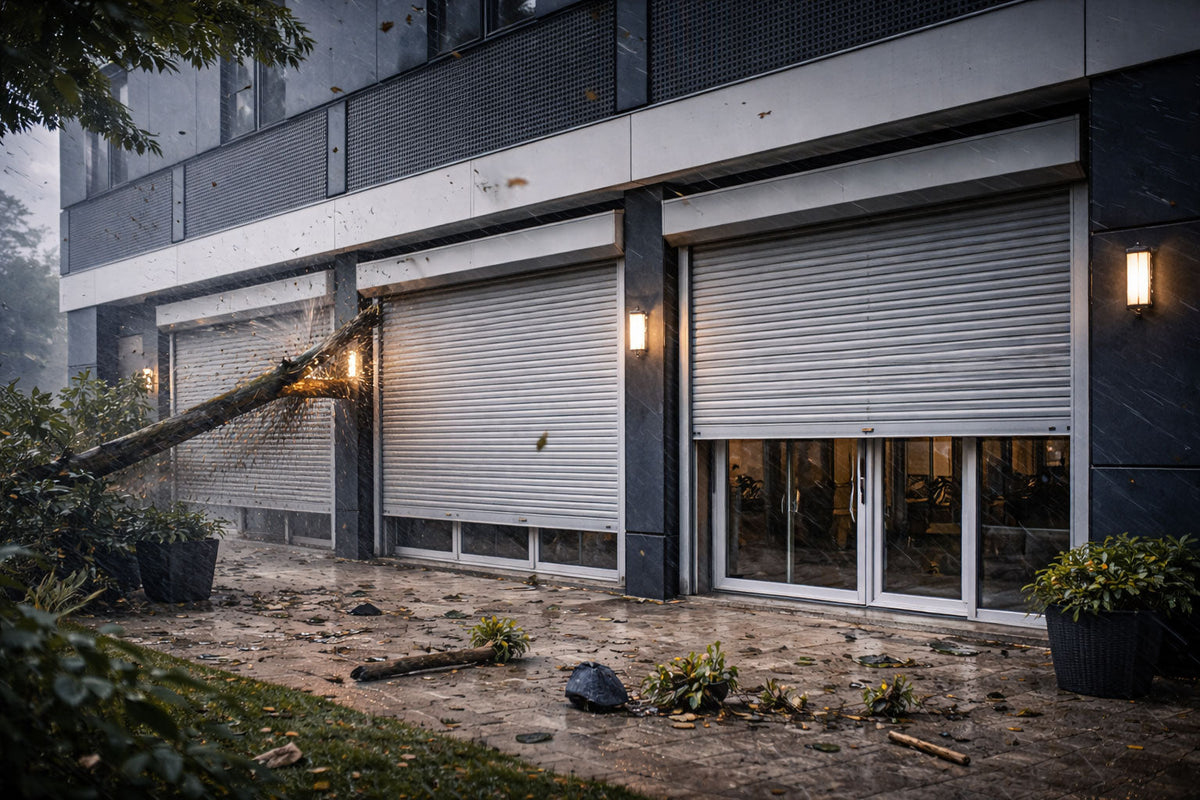
In 2020, the UK experienced some of its worst storms in years, with Storms Brendan, Dennis, Ciara, and Jorge bringing winds up to 100mph and record rainfall. Such extreme weather can severely damage property, including roller shutters.
The Importance of Wind-Resistant Roller Shutters
During these storms, many customers reported issues with roller shutters blowing out. Choosing the right roller shutter with appropriate wind resistance can mitigate such risks significantly. When purchasing roller shutters, it's crucial to consider not just cost and security but also the typical wind conditions in your area.
Roller Shutters and Exposure to Elements
Roller shutters are often exposed to harsh conditions, especially those installed in open or coastal areas where wind speeds can be particularly high. At Security Direct, we offer a range of shutters tested for various wind loads, ensuring they meet the necessary safety standards.
Understanding Wind Load Ratings
To help you understand what to look for, we’ve provided an overview of the different wind classes our products meet:
- Wind Class 2: Suitable for winds up to 59 mph.
- Wind Class 3: Can withstand violent storms up to 73 mph.
- Wind Class 4: Designed to handle hurricane-like conditions up to 88 mph.
- Wind Class 5: Our strongest, capable of withstanding major hurricanes with winds up to 100 mph.
Read more about wind ratings and their importance in our detailed article on Wind Ratings and How They Work.
Choosing the Right Roller Shutter
When selecting a roller shutter for windy conditions, consider the following:
Size of the Opening: Larger shutters have more surface area and can be more vulnerable to wind. Consider using two smaller shutters instead of one large one if possible.
Slat Selection: Opt for twin-walled slats which offer double the thickness and greater strength compared to single skin slats.
Vision Slats: Reduce the amount of vision in your shutters to maintain structural integrity.
Guide Rails: Choosing deeper guide rails helps keep more of the curtain within the guides, enhancing stability.
Windlock Guides: Specialised windlock guides provide additional strength and prevent the shutter from blowing out.
Mechanical Supports: Additional locks and supports can prevent the curtain from being pushed inward by strong winds.
Our Top Wind-Resistant Products
100mm Insulated Industrial Roller Shutter Doors: Wind Class 5, spans up to 7m, available with single or 3-phase industrial motors.
Ultra Compact Roller Shutter: Wind Class 5, spans up to 4m, equipped with a single-phase tube motor.
For further details or to address any queries, please Contact Our Sales Team.
1. Size of the opening - The larger the size of the opening, the larger the surface area of the shutter. On wide roller shutter ie; 6m+ the curtain will push inwards. If you can, then reduce the width of the shutter ie; 2 x Smaller Shutters instead of one large shutter. I appreciate this is not always possible.
2. Slat Selection - If you are in a windy location, then ideally look for a Twin Walled slat, as it is double the thickness of a single skin slat, so will provide more strength. For example our 100mm Insulated Industrial Roller Shutter Doors has a Wind Class 5.
3. Avoid Vision Slats - Where possible reduce the amount of vision in the roller shutter. The more vision you put into a roller shutter curtain, the more strength you are taking out of the slat. When a product says 20% Vision or 50% Vision, this usually will give you an idea on how much material has been removed from the curtain, to provide this amount of vision.
4. Deep Guide Rails - The deeper the guide rail, usually the more curtain is within the guides. Ideally, you want as much of the curtain in the guides as possible. Some of our Roller Shutters, have the option of upgrading to deeper guides. For example the Solid Commercial Shutters come with a standard 50mm wide "U" channel guide. You can upgrade to 65mm or 100mm guide for not much more money.
5. Windlock Guides - A windlock guides have a separate compartment to the guide rail, which has an additional deeper/stronger curtain endlock. The special wind locks are not every slat. These wind endlocks are deeper than the normal endlocks and run in the special compartment at the back of the guide. Wind Locks are designed to provide additional strength and reduce the risk of the curtain blowing out of the guides.
6. Mechanical Supports - To help reduce the risk of the curtain blowing out of the guides, you could fit additional locks and supports across the shutters. Some of our customers have fitted mechanical locks to the roller shutters, others have fitted bars across the back of the shutter, so when the wind tries and pushes the curtain inwards, the bar behind provides additional support.
If you have any queries or require more information then please Contact Us our Sales Team.


