
Enquire Online or give us a Call

Low
Mesh and Solid Fabric
20m
3m
Choice of 8 Standard Colours
7-15 working days
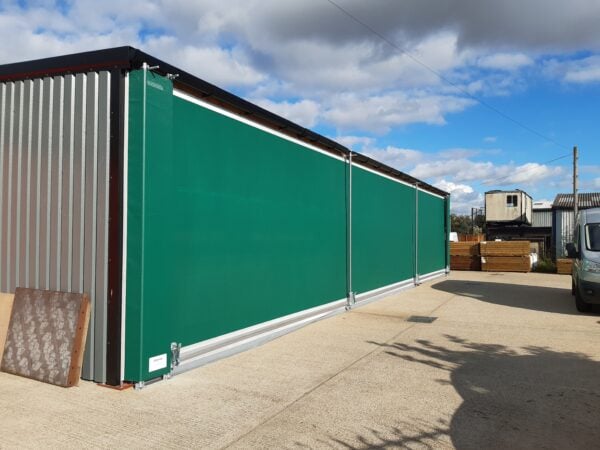
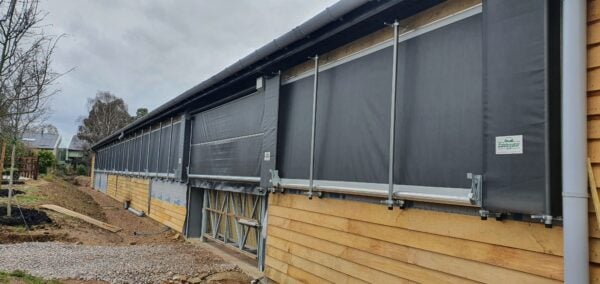
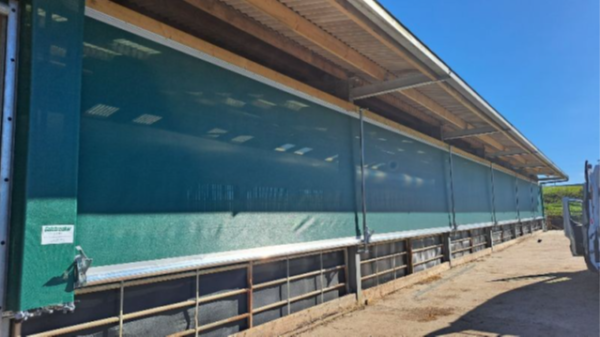
Our Agricultural Fixed Mesh Panels provide a simple, effective way to ventilate farm buildings while protecting them from harsh weather and pests. These fixed mesh screens act as “windbreaker” walls that allow fresh air and light into your barn, yet block rain and wind from blowing inside. By installing mesh panels over open bays or vents, you get the benefits of passive ventilation and weather protection in one solution. Security Direct offers two types of fixed mesh panel systems – factory-finished clip-on panels and custom off-the-roll mesh – to suit different needs. Both options deliver flexible weather protection and ventilation for livestock houses and storage buildings (even hay or straw bays), and are ideal for areas with infrequent access or permanent vent openings. In many cases, fixed panels are a smarter choice than roller or sliding curtains for providing continuous airflow at low cost. Below, we explain the options and help you decide the best solution for your agricultural building.
Our clip-on mesh panel system comes ready to install, with high-strength mesh fabric pre-finished in a range of standard sizes. These panels feature an integrated ratchet tensioning mechanism and hook system that clips directly onto your building frame with no drilling, bolting or extra support needed. Installation is extremely fast – the panel hooks onto the bay posts, and the built-in ratchets tighten the mesh for a secure, drum-tight fit. This design makes retrofitting ventilation screens remarkably easy, with no significant modifications to your structure.
Each clip-on panel is available in set heights (typically 1m, 1.5m, 2m, 2.5m or 3m) and adjustable widths up to around 20 meters to span large openings. The panel fabric can be trimmed or adjusted to fit your opening perfectly, ensuring a neat, custom finish. Once fitted, the mesh provides robust weather protection while allowing airflow – tests show these screens offer superior ventilation compared to traditional wooden cladding. In fact, a mesh panel yields about 65% more air inlet area than the equivalent space boarded wall, greatly improving ventilation without drafts. At the same time, it stops the worst of the weather: under moderate rain, water will run down the outside of the mesh with only a fine mist penetrating about 1m into the building (which quickly evaporates). This means your livestock, bedding, and feed stay dry and protected, even though the sides remain “open” for airflow.
Durability is a key advantage of our clip-on panels. The mesh material is a heavy-duty, PVC-coated polyester that is tear resistant, rot-proof, UV-stabilized, and even flame-retardant for safety. Galvanized or stainless hardware (ratchets, hooks, and straps) ensure the system stands up to farm environments without rusting. We are confident in the longevity of these panels – (Galebreaker, the origin of this design, backs them with a 10-year warranty) – so you can expect many years of service with minimal maintenance. If the panels ever need cleaning, a simple power-wash will remove dust and debris; unlike wooden boards, there’s no painting or replacing rotten planks to worry about.
Another benefit of the clip-on system is flexibility. These mesh screens can serve as semi-permanent cladding or be removed when needed. They are simple to install and quick to remove, ideal for maintaining building flexibility. For example, if you occasionally need to open up a bay for large machinery or cleaning, the panel can be unclipped in a matter of minutes and later re-attached. This makes the clip-on panels suitable for openings with infrequent access – you get the protection day-to-day, but retain the ability to temporarily clear the opening if required. Many farmers choose to cover most barn bays with fixed panels and leave one bay with a door or removable panel for equipment entry. Overall, our factory-finished clip-on mesh panels are a professional, turnkey solution for improving ventilation in existing buildings. They arrive ready to fit and include all necessary hardware and instructions. With an installation time of roughly 15 minutes per screen on a standard bay, this is one of the quickest ways to upgrade your barn’s environment with minimal downtime.
For custom projects and DIY applications, we also supply off-the-roll agricultural mesh by the meter. This option (similar to Galebreaker’s FarmFlex material) lets you purchase the same high-quality mesh used in our panels, but in continuous lengths that you can cut and fit yourself. It’s an ideal solution for fixed side cladding, continuous ventilation strips, and farm windbreaks where a prefabricated panel might not fit or where you want to cover a large area economically. Common roll heights kept in stock are 1m, 1.5m, and 2m, which can be cut to any length you need, and a 3m height roll is available to order for very tall openings. You simply select the height and the length required (we cut it per meter), and you’ll receive the mesh ready for your own installation.
Using off-the-roll mesh gives you maximum flexibility in covering unique layouts or odd-shaped openings. You can drape and fasten the mesh across any framework – whether it’s the side of a calf shed, an open gable, or a makeshift windbreak fence. The material can be overlapped or trimmed easily to cover large spans. Many customers use this mesh for DIY barn upgrades, such as replacing old Yorkshire boarding with a vented mesh side, or adding ventilation panels to calf pens and poultry houses. It’s also popular for DIY windbreak screens, for example enclosing one end of a calf creep area or covering gates and feed shelters to reduce drafts.
When installing the mesh, you’ll typically use battens, tensioning ratchets, or special fixings to secure it tautly. We offer tensioning kits for the mesh to help achieve a tight, wind-resistant fit. These kits include hardware like ratchet straps, brackets, and wind seal components so you can clamp the mesh firmly to your building’s beams. With the mesh properly stretched and fastened, the result is very similar to the factory panels – a tensioned, secure screen that won’t flap in the wind. The main difference is that you cut and fit it yourself, which is great for long continuous runs or irregular sections that don’t match standard panel sizes.
Opting for off-the-roll mesh can be more cost-effective for large projects or multiple buildings. You’re essentially buying in bulk and doing the fitting in-house, which can save on cost if you have the time and skills for a DIY approach. The mesh itself is the same durable, rot-proof material used in our clip-on panels, so you aren’t compromising on quality. You retain the key benefits of ventilation, weather shielding and bird-proofing – just in a do-it-yourself format. This approach is well-suited to farmers who are comfortable with basic installation work and want to tailor the ventilation solution exactly to their building. And if you need guidance, our team is happy to advise on the best practices for fixing and tensioning the mesh. In summary, the off-the-roll mesh system offers ultimate versatility: you can create custom-sized vent panels or full-length breathable walls on demand, making it a practical choice for permanent venting and one-off projects alike.
Our agricultural fixed mesh panel systems offer numerous benefits for livestock housing and crop storage. Here are the key advantages:
The mesh design enables continuous airflow through your building, providing abundant fresh air without any electrical fans or moving parts. This natural ventilation helps remove humidity, ammonia, and heat buildup, creating a healthier environment for livestock and reducing respiratory issues. Unlike solid walls or closed doors, mesh panels allow air exchange while still providing shelter, ensuring your shed has plenty of oxygen and remains at a stable temperature.
Fixed mesh panels act as a windbreak and rain barrier for your barn. They significantly cut down on wind chill inside the building and stop rain and snow from blowing in. Under typical conditions, water hits the outside of the mesh and mostly drains off rather than entering – any moisture that does pass through becomes a fine mist, only reaching a short distance inside and evaporating quickly. This keeps bedding and feed dry and helps maintain a comfortable, draft-free environment for animals. By blocking gale-force winds and driving rain, the panels improve animal welfare and protect your assets from weather damage.
An additional benefit of the mesh screening is keeping out unwanted pests, especially birds. The mesh size is small enough to prevent birds (and bats) from entering barns and feed stores, which is important for biosecurity and hygiene. In fact, these screens help you meet farm assurance and Red Tractor standards by excluding birds from livestock houses and grain storage. By bird-proofing openings, you can avoid contamination of feed with droppings and reduce disease risks. The mesh also deters rodents and larger insects to some extent, acting as a first line of defense for your building.
Both our clip-on panels and DIY mesh systems are designed for straightforward installation on existing structures. The clip-on panels require no drilling or welding into your building’s frame – they come with hooks and tension straps that latch onto pillars or beams in minutes. This means you can retrofit ventilation to an old shed very quickly, without hiring special equipment. In fact, installing a fixed mesh panel is estimated at only ~15 minutes per bay, much faster than fitting traditional timber cladding or sliding doors. The process can easily be done by farm staff or a general contractor. Likewise, the off-the-roll mesh can be fixed with basic tools (staples, screws, or ratchet kits) and cut to size on-site, making it a simple DIY job for those comfortable with ladder work. Overall, adding these panels is a low-hassle project that yields immediate results.
Our mesh panels are built to last in agricultural conditions. The PVC-coated polyester fabric is extremely tough – tear-proof, rot-proof, and UV-stabilized to resist years of sun and rain exposure. Unlike plain netting, this industrial-grade material won’t fray or degrade, and it maintains its tensile strength season after season. Many panels are also flame-retardant for added safety in barns. The hardware (ratchets, hooks, tracks if applicable) is made of corrosion-resistant metal, ensuring your investment stays secure even in damp, ammonia-rich atmospheres. Maintenance is minimal: periodically check the tension and integrity, and hose off dust or cobwebs as needed. There’s no painting, no wood to rot, and no mechanical parts to lubricate. In short, fixed mesh panels offer a set-and-forget solution – reliable, long-lasting protection with very little upkeep required.
Fixed agricultural mesh panels can be used in a wide range of scenarios on the farm. Below are some typical use cases where these products excel:
Young animals like calves need well-ventilated housing without cold drafts. Fixed mesh panels are perfect for enclosing calf shed walls – they keep rain and wind out while allowing fresh air in, reducing the risk of pneumonia and heat stress in youngstock. High-performance mesh options (with smaller perforations) can be used in calf barns to provide extra weather protection for vulnerable animals. Many calf rearers install mesh panels on barn openings to ensure a constant supply of fresh air, resulting in healthier, more comfortable calves. The panels can be fitted to gates or the upper half of walls, creating a draft-free environment that still has plenty of airflow and light.
Open-fronted feed bays or grain stores benefit greatly from fixed mesh screens. By covering these openings with mesh, you prevent birds from entering and spoiling feed while maintaining ventilation to keep feed dry. For example, a commodities shed storing grain or a TMR (Total Mixed Ration) bay can have a mesh panel at the front – this keeps pigeons and sparrows out (protecting your grain from contamination) and stops rain from blowing onto the feed, all without sealing the area completely. Air can still circulate, which helps avoid condensation and mold growth on stored feed. Fixed mesh panels in feed areas are often a requirement for farm assurance schemes, and they are a simple way to meet those standards while preserving easy visual monitoring of your feed inventory.
Many livestock buildings are designed with open ridges, eaves, or gable ends for natural ventilation. Our fixed mesh systems are ideal for covering these permanent vents. For instance, dairy barns with continuous eave gaps can be fitted with a long strip of off-the-roll mesh to serve as an eave vent, allowing hot air to exit while preventing rain from blowing in. Gable end fans or openings can be covered with mesh when not in use, keeping birds out of attics or roof spaces. Likewise, if you have sections of side wall intended to remain open year-round (common in beef or pig housing for airflow), a mesh panel is a smart way to cover the gap. It essentially functions like a breathable window – letting air out and light in, but buffering the wind and blocking debris. Anytime you have a hole in the building for ventilation, consider a fixed mesh panel to guard that opening without defeating its purpose.
Fixed mesh panels are a popular choice for farmers looking to upgrade older sheds or implement DIY climate control improvements. Rather than installing expensive mechanical ventilation or rebuilding walls, you can often dramatically improve a barn by retrofitting mesh along one or more sides. For example, an old hay shed with one open side can be converted into a sheltered livestock bay by fitting mesh tarps across the open face. Or, if you have a pole barn with Yorkshire boarding that isn’t providing enough airflow, you can replace sections of it with mesh screens to increase ventilation. The off-the-roll mesh is especially useful for these projects – you can cut it to cover any shape or span. It’s also a great solution for temporary or seasonal structures: if you erect a lambing poly-tunnel or a temporary cattle shelter, adding mesh panels on the sides gives you weather protection that you can remove later. Because the mesh is relatively lightweight and easy to handle, it’s perfect for DIY cladding on structures that might not support heavy materials. Many customers find that using mesh screens is not only effective but also cost-competitive with traditional cladding – in fact, the installed cost of standard mesh panels is similar to spaced timber boarding, and notably cheaper than fully closed boarding systems. For a fraction of the price of a new building, you can retrofit an existing one to be more airy, weather-tight, and compliant with modern standards, just by using fixed mesh panels in the right places.
Not sure which product suits you needs? We can help you build a quote online within 5 minutes